


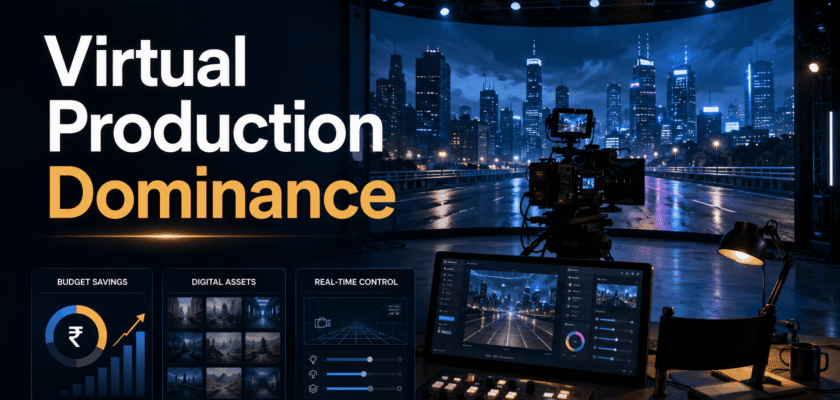
LED volume studio rental costs 2026 are now changing how independent cinema teams plan shoots, budgets, and post-production timelines. Instead of waiting months to fix scenes later, filmmakers can now build many visual choices before the camera starts rolling.
This shift does not make filmmaking cheap overnight. However, it does move spending from uncertain post-production into planned pre-production. For indie producers, that can protect cash flow and reduce costly reshoots.
�� Quick Answer: Why LED Volume Stages Matter
Virtual production lets directors film actors in front of real-time digital backgrounds. These backgrounds run through game-engine style software and appear on large LED walls.
As a result, the camera captures more of the final look on set. Therefore, teams can cut some green-screen cleanup, location travel, weather delays, and late VFX changes.
What Is Virtual Production in Simple Words?
Virtual production combines physical cameras, LED walls, real-time rendering, camera tracking, and digital environments. The LED wall becomes a live set that reacts to camera movement.
For example, a small film can show a desert, a city rooftop, or a spaceship interior without building every set from scratch. The background moves with the camera, so the shot feels more natural.
This is why virtual production software for indie filmmakers is becoming important. It gives smaller teams more control before the editing room begins.
Why Post-Production Costs Fall
Traditional VFX often creates a long chain. First, the crew shoots on green screen. Then editors, compositors, color artists, and VFX teams rebuild the world after the shoot.
But LED volumes change the chain. The scene, lighting, and background are approved earlier. So fewer surprises reach the final edit.
The biggest saving usually comes from fewer reshoots, fewer emergency fixes, and fewer last-minute background changes. Also, actors perform better when they can see the world around them.
�� Old Pipeline vs LED Volume Pipeline
| Workflow Area | Traditional Indie Film Route | LED Volume Route |
| Location planning | Travel, permits, weather risk, and crew movement. | Digital locations can be prepared before the shoot. |
| Lighting control | Natural light may change quickly. | LED walls help create more stable interactive light. |
| VFX cleanup | Green spill and matching issues can increase cost. | More final pixels can be captured in-camera. |
| Budget risk | Costs may rise late in post-production. | Costs shift earlier into planning and stage time. |
| Asset reuse | Sets are often single-use. | Digital assets can support sequels, teasers, posters, and trailers. |
LED Volume Studio Rental Costs 2026: What Indie Producers Must Check
LED volume studio rental costs 2026 can vary widely. The final cost depends on wall size, pixel pitch, camera tracking, Unreal Engine operators, media servers, lighting crew, calibration time, and shoot hours.
So, producers should never compare only the room rental. They should compare the full shooting package.
A smaller LED wall may suit interviews, music videos, ads, and tight drama scenes. However, a large curved volume may be better for action, vehicles, fantasy, or wide cinematic frames.
✅ Practical Budget Questions Before Booking
- Does the package include camera tracking and real-time rendering support?
- Is Unreal Engine setup included, or billed separately?
- How many pre-light and calibration hours are included?
- Can the team test assets before shoot day?
- Does the studio provide virtual art department support?
- Can the digital sets be reused for trailers and marketing assets?
Why Indie Filmmakers Like Real-Time Control
Independent filmmakers often lose money when creative changes happen late. A background mismatch, bad sky replacement, or weak green-screen key can stretch the post budget.
With LED volume stages, the director can approve mood, color, camera angle, and background depth during production. Therefore, the team can fix many issues while the actors are still on set.
This is not only a technical upgrade. It is a planning upgrade. It turns post-production panic into pre-production discipline.
Virtual Production Software for Indie Filmmakers
Virtual production software for indie filmmakers usually includes a real-time engine, asset tools, camera tracking support, color workflow, playback systems, and review tools.
Unreal Engine remains a common choice because it supports real-time 3D environments. Blender can help create assets. DaVinci Resolve can support color and finishing. Meanwhile, specialist LED volume tools handle playback, sync, and calibration.
However, software alone is not enough. The best results come when the director, cinematographer, production designer, VFX supervisor, and editor plan together from day one.
The New Role of the Virtual Art Department
In a normal indie film, many visual decisions move slowly. But virtual production needs a strong virtual art department before shooting begins.
This team builds digital locations, tests lighting, prepares camera-ready assets, and checks whether the LED wall will look real on camera. Because of this, the schedule becomes more front-loaded.
At first, that may feel expensive. But it can reduce waste later. Also, it gives producers a clearer view of final frames before the shoot starts.
How Digital Cinema Asset Monetization Workflows Are Changing
Digital cinema asset monetization workflows are another big reason virtual production is growing. A digital set does not need to disappear after one scene.
A film team can reuse the same 3D city, room, vehicle, or fantasy landscape for trailers, posters, social clips, behind-the-scenes videos, game teasers, and sequel planning.
This matters for indie studios. They often need extra value from every rupee, dollar, or euro spent. A strong asset library can become a long-term production advantage.
Where LED Volumes Still Need Caution
LED volume stages are powerful, but they are not perfect for every film. Fast camera moves, reflective costumes, complex wide shots, and poor asset quality can still create problems.
Also, bad planning can make virtual production more expensive than a traditional shoot. If the team arrives without tested assets, stage time can burn quickly.
So, the best indie strategy is simple. Use LED volumes only where they remove real production risk. Do not use them just because they look futuristic.
�� Smart Use Cases for Smaller Films
- A rainy street scene that would be risky to shoot outside.
- A foreign city backdrop without international travel.
- A sci-fi cockpit or control room with interactive lighting.
- A music video with several fast background changes.
- A fantasy short film that needs reusable digital environments.
- A product film where background control matters more than location realism.
What This Means for Independent Cinema in 2026
In 2026, the strongest indie films may not be the ones with the biggest budgets. They may be the ones with the best workflow.
LED volume studio rental costs 2026 will still matter. Yet the real question is different. Can the stage reduce uncertainty, protect the schedule, and create reusable digital assets?
If yes, virtual production can help indie cinema look bigger without losing budget control.
Conclusion: Virtual Production Is a Budget Strategy, Not Just a Visual Trick
Virtual Production Dominance is not only about futuristic film sets. It is about moving creative risk earlier, reducing late-stage fixes, and giving indie producers cleaner control over every frame.
For smaller teams, the winning formula is clear. Plan early, test assets, book the right LED volume, and connect production with post from the start.
That is how LED volume studio rental costs 2026 can become a smart investment instead of another expensive line item.


