
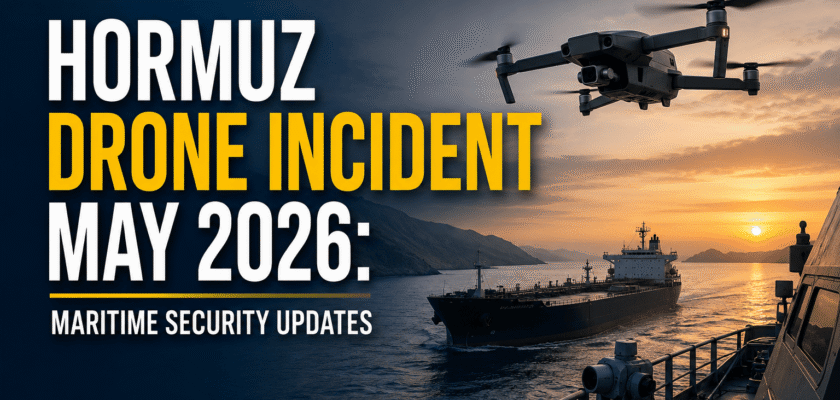
Defensive Drone Interceptions: Inside the Latest Security Measures in the Strait of Hormuz.
The structural environment governing international maritime shipping lanes is facing a critical tactical transformation. For several decades, securing major energy transit corridors relied almost entirely on deploying heavy naval surface fleets and standard anti-ship defense barriers. This traditional maritime strategy assumed that visible naval deterrence was sufficient to keep commercial trading channels clear and stable. However, the rapid proliferation of cheap, automated aerial weapons has permanently disrupted those legacy defense setups, exposing vast cargo networks to asymmetrical threats.
Fortunately, advanced defense frameworks are adjusting rapidly to counter these modern technological challenges.
The intense military activity tracking the Hormuz drone incident May 2026 updates highlights this critical operational shift.
A sudden flare-up involving one-way attack drones has triggered immediate counter-strikes across the regional sea lane.
The defensive engagement began when regional forces launched five distinct automated weapons targeting active shipping channels.
Responding to the clear threat, international naval forces executed flawless interceptions to neutralize the aerial danger. Additionally, coordinated defensive strikes targeted the primary ground control station in Bandar Abbas to prevent further launches. This major confrontation highlights the urgent implementation of next-generation international maritime security updates to safeguard global trade. Consequently, military planners are fundamentally adapting their US military defensive actions to build an unshakeable electronic shield over strategic trade choke points.
1. The Aerial Threat Matrix: Why Low-Altitude Attacks Strain Legacy Radar
The primary operational challenge driving this rapid security evolution centers on the technical difficulty of detecting low-flying automated weapons. Standard shipboard defensive radars are built to identify large, high-altitude ballistic missiles or fast moving jet fighter aircraft.
In contrast, small automated attack systems utilize compact composites and hug the sea surface, slipping beneath old radar horizons.
                    [ The Legacy Fleet Radar Blindspot ]
     (Low-Flying Attack Drones ──► Evade High-Altitude Radar ──► Severe Cargo Fleet Risk)
                                      │
                                      ▼
                [ The 2026 Integrated Defense Architecture ]
     (Continuous Sensor Mesh ──► Automated Laser Interceptions ──► Total Channel Clearance)
These low-altitude attack tactics create intense tactical pressure across international defense networks:
- The Radar Tracking Barrier: Small composite airframes return tiny radar signatures, blending easily into ocean wave reflections.
- The Swarm Saturation Risk: Multiple synchronized launches can overwhelm a single ship’s defensive tracking loops over brief operational windows.
- The Proximity Menace: Consequently, vessels receive minimal warning times, requiring automated close-in weapons systems to intercept threats before impact.
2. Re-Engineering Coastal Defense: The Tripartite Shield Architecture
The successful resolution of the recent shipping crisis relied on deploying a highly integrated, multi-layered electronic warfare grid.
A. Wiring Smarter Tracking Links
Modern naval task forces no longer look at air defense as an isolated, single-ship responsibility.
Instead, security networks wire satellite telemetry, airborne radar planes, and local destroyer sensors into a single defensive fabric.
This integrated mesh uses advanced artificial intelligence to identify, track, and rank multiple incoming threats simultaneously.
By sharing tracking data instantly across the entire fleet, the network can assign the closest defensive asset to neutralize a target smoothly.
B. Executing Proactive Ground Neutralization
Furthermore, this modernized defense strategy pairs active mid-air interceptions with fast, preventive strikes to eliminate threats right at the source:
  [ Drone Threat Detected ] ───► [ Automated Fleet Interceptors Launch ]
                                                   │
                                                   ▼
                                    [ Flawless Mid-Air Destructions ]
                              "Five Attack Drones Neutralized Successfully"
                                                   │
                                                   ▼
                                    [ Preventive Launch Site Strike ]
                              "Ground Station Disabled to Neutralize Threats"
The combined defensive operation successfully downed five incoming attack drones before they could reach commercial shipping lanes.
Simultaneously, tactical aircraft targeted a ground command center in Bandar Abbas that was preparing a sixth vehicle.
This fast, preventive response disabled the launch infrastructure entirely, stopping the wave before it could saturate regional defenses.
Consequently, the decisive action protected adjacent allied airspace, proving that modern maritime security requires neutralizing threats before they leave the coast.
3. Strategic Matrix: Fragmented Fleet Defense vs. 2026 Integrated Sensor Webs
| Security Vector Axis | Traditional Isolated Fleet Defenses | 2026 Integrated Sensor Webs |
| Target Detection Speed | Slow; limited by single-ship radar horizon limits | Instant; multi-platform linked radar mesh |
| Interception Method Base | Costly; fires high-end surface-to-air missiles | Balanced; mixes kinetic hits with electronic jams |
| Countermeasures Stance | Reactive; fires back after weapons enter local space | Proactive; strikes ground launch hubs early |
| Allied Force Alignment | Fragmented; poor data sharing across regional units | Unified; real-time dashboard data syncing |
| Risk Characterization | High vulnerability to low-altitude saturation loops | Withdrawn Risk; tech-backed transit safety |
4. Electronic Soft-Kills: Using Targeted Jamming to Protect Shipping Lanes
The final core trend reshaping maritime protection focus moves away from expensive physical missiles toward innovative electronic countermeasures. Because firing million-dollar interceptors against cheap automated drones creates an unsustainable financial drain, navies are scaling up directed energy weapons.
  [ Attack Drone Approaches Fleet ] ───► [ High-Power Directional Jammer Activates ]
                                                       │
                                                       ▼
                                        [ Satellite Navigation Signals Severed ]
                                  "Forces Target to Lose Core Flight Guidance"
                                                       │
                                                       ▼
                                        [ Safe Passive Ocean Tumbles ]
                                  "Defeats Threat for Pennies Per Engagement"
Naval vessels install specialized electronic warfare systems that disrupt the control frequencies of incoming weapons.
When a drone enters the defensive zone, high-power directional jammers cut its satellite and control links instantly.
Unable to navigate, the automated weapon loses guidance and tumbles harmlessly into the ocean, saving expensive missile inventories.
Thus, proactive electronic management transforms modern fleet defense, proving that long-term maritime resilience is won by building smart, hyper-efficient electronic shields right where trade flows.


