
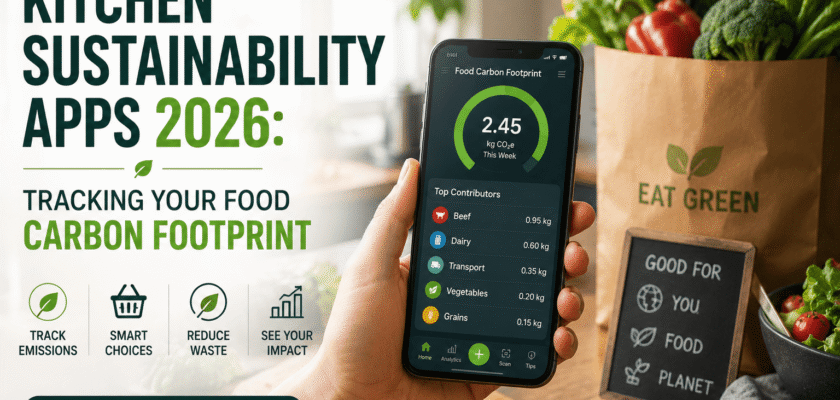
The Hyper-Local Pantry: How AI Grocery Software Tracks the Eco-Footprint of Your Weekly Ingredients.
The underlying roadmap directing modern household cooking is undergoing a rapid, technology-led transformation. For decades, home kitchens operated under a highly isolated consumer model based purely on ingredient price and shelf availability. Shoppers routinely purchased heavily packaged, out-of-season produce shipped from distant continents without considering the massive shipping emissions required for delivery. This traditional supply approach successfully provided year-round product variety, but it hidden massive environmental costs while increasing household food waste levels globally.
Fortunately, modern grocery technology is executing a sharp pivot toward environmental transparency in the kitchen.
We have officially entered a new era marked by the rapid rise of kitchen sustainability apps 2026 platforms.
Driven by a growing demand for eco-friendly living, home cooks are tracking their environmental impact in real time.
By utilizing advanced software integrations, families are tracking food carbon footprint metrics directly from their smartphones.
This profound behavioral evolution is permanently reshaping conscious meal prep tech habits across modern households. Consequently, smart consumers are using data-driven recipe systems to eliminate kitchen waste entirely. This transition proves that sustainable cooking no longer requires complex lifestyle sacrifices, but rather relies on intelligent software that optimizes your pantry automatically.
1. The Digital Ledger: Converting Raw Ingredients into Carbon Equivalents
The primary technological catalyst driving this grocery revolution centers on using advanced data modeling to calculate ingredient supply chains. Standard recipe cards focus entirely on basic calorie counts, macro balances, and cooking temperatures.
In sharp contrast, next-generation sustainability software tracks the complete life journey of every single carrot, apple, and grain box.
                    [ Unmonitored Grocery Shopping ]
     (Blind Global Sourcing ──► High Hidden Air Shipping ──► Massive Household Carbon Drops)
                                     │
                                     ▼
                [ The 2026 Connected Pantry Shield ]
     (Instant Receipt Scans ──► Local Farm Mileage Check ──► Low Impact Meal Planning)
These highly sophisticated tracking systems provide immediate, clear visibility into home resource consumption patterns:
- The Sourcing Mileage Trap: The software analyzes regional freight logs to see if your berries traveled via high-emission cargo planes.
- Calculating Methane Impacts: Consequently, the database calculates the precise methane weight tied to dairy items based on farm production methods.
- Building a Clean Score: Therefore, users receive a clear, aggregated carbon score for their entire shopping cart right at checkout.
2. Inside the Smart Kitchen: Turning Expiring Leftovers into Low-Impact Dinners
The real-world success of this sustainable cooking model relies on connecting live pantry inventory tracking with adaptive AI recipe engines.
A. Setting Up Automated Expiration Alerts
Modern home chefs do not let premium fresh ingredients rot forgotten at the bottom of refrigerator crisper drawers.
Instead, they use advanced kitchen sustainability apps 2026 layouts that log exact purchase dates via digital grocery receipts.
The software monitors the natural shelf life of your items, sending friendly smartphone alerts as fresh meats or greens approach expiration.
This continuous monitoring layer ensures families use their groceries efficiently, stopping good food from ending up in local landfills.
B. Generating Custom Eco-Friendly Meal Plans
Furthermore, this smart inventory tracking connects with creative cooking engines to maximize your weekly food budget:
  [ Software Flags Wilted Spinach ] ───► [ AI Scans Pantry for Matching Spices ]
                                                    │
                                                    ▼
                                     [ Custom Low Waste Recipe Built ]
                               "Suggests Healthy Sauteed Greens Lunch in Seconds"
                                                    │
                                                    ▼
                                     [ Kitchen Material Waste Erased ]
                               "Saves Money and Keeps Food Out of Waste Bins"
The system’s smart recipe generator builds custom cooking steps designed around the exact items already sitting in your kitchen.
If the app detects expiring spinach and half-used tofu blocks, it crafts a personalized stir-fry recipe instantly.
This automated tracking loop completely removes the daily guesswork from meal prep while prioritizing low-impact, plant-forward ingredients.
Consequently, families cut down their weekly grocery waste substantially, proving that smart software builds highly efficient, sustainable households.
3. Strategic Matrix: Blind Traditional Cooking vs. 2026 Data-Driven Pantries
| Household Kitchen Vector | Traditional Blind Cooking Habits | 2026 Data-Driven Pantries |
| Ingredient Sourcing Basis | Focuses purely on shelf price and brand marketing | Tracks local farm miles and packaging traits |
| Pantry Waste Management | Reactive; foods are thrown out after molding | Proactive; automated alerts prompt early use |
| Recipe Generation Path | Static cookbooks; ignores existing kitchen items | Dynamic AI; builds meals around expiring stock |
| Carbon Impact Tracking | Missing; consumers guess environmental costs | Absolute; logs clear carbon scores per meal |
| Risk Characterization | High risk of financial waste and high carbon drops | Withdrawn Risk; tech-backed asset efficiency |
4. Closed-Loop Shopping: Syncing Local Farm Networks with Smart Pantries
The final core trend defining advanced kitchen tech links your weekly grocery list directly to local community agriculture networks. By steering consumers toward regional food providers, sustainability software bypasses long, high-emission corporate shipping routes completely.
  [ App Maps Local Harvest Cycles ] ───► [ Recommends Fresh Seasonal Produce ]
                                                       │
                                                       ▼
                                        [ Direct Digital Farm Ordering ]
                                  "Bypasses Long High Emission Shipping Routes"
                                                       │
                                                       ▼
                                        [ True Sustainable Eating Locked ]
                                  "Supports Local Farms and Delivers Fresh Food"
Smart grocery applications check local farm supply levels continuously to suggest peak-season alternative ingredients automatically.
If a user tries to add imported, out-of-season greenhouse tomatoes to their cart, the app offers fresh local options instead.
This automated suggestion layer supports nearby farming families while delivering crisp, nutrient-dense produce straight to your door.
Thus, proactive kitchen management transforms everyday cooking routines into a powerful tool for environmental change. This smart technological balance keeps your home healthy, proving that true cooking mastery is won by building efficient, zero-waste food systems right in your own home.


