
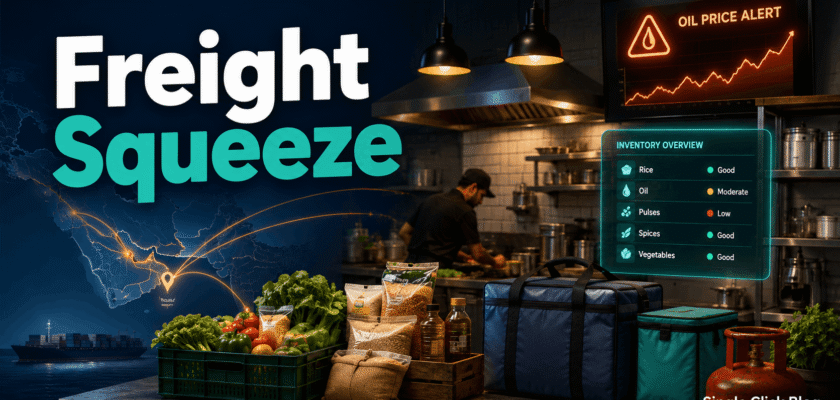
The Middle-East Freight Squeeze: How Rising Oil Prices Over the Hormuz Strike Are Increasing Cloud Kitchen Grocery Bills
Strait of Hormuz conflict freight costs are now a serious worry for Indian cloud kitchens.
The reason is simple. A kitchen does not only pay for vegetables, rice, oil, and packaging.
It also pays for fuel, delivery, cold storage, LPG, transport, and supplier risk.
So, when West Asia gets tense, grocery bills can rise before customers even notice.
This is why many cloud kitchen owners are watching oil prices, freight rates, and daily inventory more closely in 2026.
| ⚠️ Quick fact-safe noteOil prices moved sharply around the latest West Asia tension, but daily prices can change fast.So this blog explains the cost chain, not a fixed future price prediction.Cloud kitchens should treat this as a planning guide, not financial advice. |
Why the Strait of Hormuz Conflict Freight Costs Matter
The Strait of Hormuz is one of the world’s most important energy routes.
A disruption there can affect crude oil, LNG, LPG, shipping insurance, and freight timing.
For India, this matters even more because fuel and logistics touch almost every food business.
As a result, the Strait of Hormuz conflict freight costs can reach a cloud kitchen in many small ways.
First, transporters face higher fuel risk. Then distributors raise delivery charges. After that, restaurants see costlier supplies.
How Oil Prices Reach a Cloud Kitchen Bill
A cloud kitchen may not import oil directly.
However, its suppliers depend on diesel, LPG, cold chains, and intercity transport.
For example, a tomato crate may travel through a mandi, warehouse, and last-mile delivery route.
Each step uses fuel or labour linked to fuel.
Therefore, even a small fuel shock can add pressure to the final grocery bill.
The Hidden Cost: LPG, Packaging, and Delivery
Cloud kitchens often focus only on raw food prices.
But the bigger pressure can come from hidden operating costs.
Commercial LPG affects cooking cost.
Plastic, foil, paper boxes, and delivery bags also depend on energy-heavy supply chains.
Also, delivery partners may raise surge charges during fuel volatility.
Together, these small increases can reduce food margins quickly.
Restaurant Raw Material Inflation in India
Restaurant raw material inflation in India does not always move in one straight line.
Vegetables may cool for one week and rise again after a transport shock.
Edible oil, flour, dairy, spices, and packaging can also move at different speeds.
This makes menu pricing difficult for cloud kitchens.
If prices rise too fast, customers may reduce orders.
But if prices stay the same, the kitchen owner may lose margin.
Why Cloud Kitchens Feel the Squeeze Faster
Cloud kitchens run on tight numbers.
They often sell through apps, discounts, delivery fees, and commission structures.
So a small rise in grocery cost can become a big margin problem.
A dine-in restaurant may adjust experience, seating, and service value.
But a cloud kitchen competes mainly on taste, price, rating, and delivery speed.
That is why the Middle-East freight squeeze can hurt online food brands quickly.
Cloud Kitchen Inventory Management 2026: What Owners Can Do
Cloud kitchen inventory management in 2026 needs more discipline.
Owners should not wait for bills to rise suddenly.
Instead, they can track weekly ingredient movement and supplier quotes.
They can also divide items into fast-moving, risky, and stable categories.
This helps them avoid panic buying and dead stock.
Also, it keeps cash flow safer during freight shocks.
✅ Smart Cost-Control Checklist for Cloud Kitchens
| Action | Why it helps |
| Track fuel-linked suppliers | Ask vendors if delivery rates can change weekly. |
| Create a seven-day price sheet | Update key ingredients like oil, dairy, flour, and vegetables. |
| Reduce menu waste | Pause slow-selling dishes during high-cost weeks. |
| Use flexible recipes | Keep backup ingredients ready for volatile items. |
| Lock bulk rates carefully | Do it only for stable items with good shelf life. |
| Watch packaging costs | Boxes and foil can rise with energy prices. |
| Protect customer trust | Avoid sudden price hikes without better value. |
What Customers May Notice
Customers may first see smaller discounts.
Then they may see delivery fees, combo changes, or limited menus.
Some kitchens may also push high-margin dishes during price shocks.
This is not always greed. Many small operators are simply protecting survival margins.
What Cloud Kitchen Brands Should Avoid
Owners should avoid changing prices every day.
That can confuse repeat customers.
They should also avoid cutting quality too much.
Low-quality food can damage ratings faster than a small price increase.
Instead, kitchens should simplify menus and control waste first.
The Bigger Picture for India’s Food Business
The food business is now tied to global energy security.
This means local kitchens must think like supply chain managers.
They need backup suppliers, smarter stock control, and better pricing discipline.
In 2026, a successful cloud kitchen is not only a cooking unit.
It is also a small logistics business.
| �� Best line for featured snippetStrait of Hormuz conflict freight costs can increase cloud kitchen grocery bills through fuel, LPG, shipping insurance, packaging, cold-chain transport, and supplier price risk. |
Conclusion: The Freight Squeeze Is a Kitchen Margin Test
The Middle-East freight squeeze is not only a global oil story.
It is also a daily kitchen cost story.
Strait of Hormuz conflict freight costs can quietly move through transport, LPG, packaging, and raw material bills.
Therefore, cloud kitchens need simple planning, smarter stock control, and clean pricing rules.
This approach can protect margins without hurting customer trust.
FAQs
Why do Strait of Hormuz conflict freight costs affect cloud kitchens?
They affect fuel, shipping, insurance, LPG, transport, and supplier charges. These costs can raise grocery bills.
Will every cloud kitchen raise prices?
Not always. Some may reduce discounts, change combos, or simplify menus before raising prices.
Which food costs may rise first?
Cooking fuel, edible oil, packaging, intercity transport, and cold-chain delivery can react quickly.
What is the best short-term solution?
Track weekly costs, reduce menu waste, and protect high-margin dishes during volatile weeks.


