Outbreak Border Defense: Why Travelers Need Clear Facts
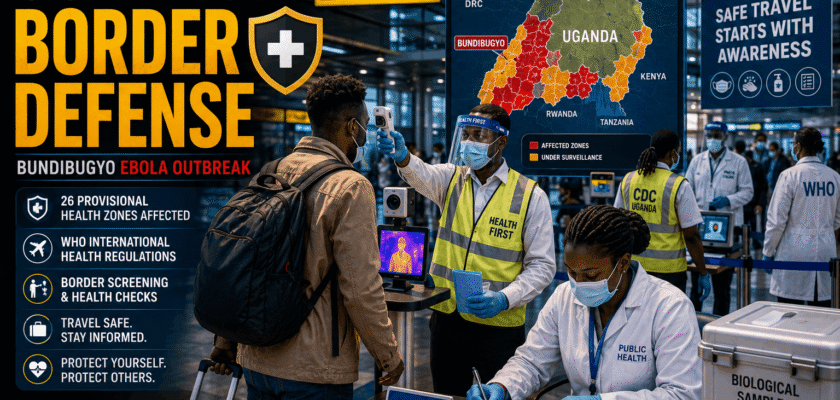
Outbreak border defense has become a major travel-health issue because the Bundibugyo Ebola outbreak in the Democratic Republic of the Congo and Uganda has spread across multiple health zones and triggered international coordination under the WHO’s International Health Regulations.
The most important point for travelers is that this does not mean all travel is automatically banned. WHO’s approach focuses on surveillance, contact tracing, points of entry, rapid reporting and targeted health measures rather than unnecessary blanket restrictions.
Travelers need accurate information, not panic. Risk depends on destination, type of contact, local transmission and the traveler’s activities.
What the 26 Health Zones Figure Means
A health zone is an administrative public-health area used for surveillance, service delivery and outbreak response.
The number of affected zones changed quickly as new laboratory results arrived. WHO reported 23 affected zones as of May 31 across Ituri, North Kivu and South Kivu. Later external reporting placed the count around 25 to 26.
This number should be treated as provisional because:
- Suspected cases may later test negative
- Confirmed cases can be reassigned to another zone
- New zones may be added
- Data can be revised after verification
- Cross-border cases may be counted separately
The trend is more important than one fixed number: the outbreak expanded geographically and required stronger regional preparedness.
What the International Health Regulations Actually Do
The International Health Regulations, or IHR, are legally binding rules that help countries detect, report and respond to public-health threats that may cross borders.
They support:
- Rapid notification to WHO
- National focal-point communication
- Coordinated risk assessment
- Temporary recommendations
- Measures at airports, ports and land borders
- International contact tracing
- Protection of travel and trade
- Avoidance of unnecessary restrictions
The IHR do not automatically close borders. They create a system for proportionate public-health action.
Why WHO Declared a Public Health Emergency
WHO determined that the outbreak constituted a Public Health Emergency of International Concern because of its severity, cross-border spread and difficult operating environment.
The outbreak involved:
- A rare Bundibugyo strain
- No licensed vaccine specifically available for this strain
- No approved specific treatment
- Insecurity in affected regions
- High population movement
- Limited contact tracing
- Laboratory and referral challenges
- Confirmed spread into Uganda
The declaration was meant to mobilize international cooperation, not to create panic.
What Temporary Recommendations Mean for Travelers
Temporary recommendations are time-limited measures issued under the IHR during a public-health emergency.
For travelers, they may influence:
- Health screening at borders
- Travel-health information
- Contact-detail collection
- Symptom reporting
- Referral procedures
- Medical observation after exposure
- Coordination between countries
- Advice for airlines and transport operators
These recommendations are not the same as universal travel bans.
How Ebola Spreads
Ebola is not spread through casual airborne contact in the way influenza spreads. It is mainly transmitted through direct contact with blood or other bodily fluids of an infected person, or with contaminated materials.
Risk rises through:
- Caring for a sick person without protection
- Contact with bodily fluids
- Handling contaminated bedding or clothing
- Unsafe burial practices
- Direct contact with infected animals
- Working in clinical settings without proper infection control
Ordinary travelers who avoid direct exposure generally face much lower risk than health workers or close household contacts.
Who Faces the Highest Risk
The highest-risk groups include:
- Health-care workers
- Laboratory staff
- Caregivers
- Burial teams
- Household contacts
- Humanitarian workers
- People entering active treatment areas
- Travelers with direct exposure to a suspected case
Tourists who stay away from outbreak zones and avoid high-risk contact have a lower risk, but they should still follow official guidance.
Should Travelers Cancel Their Trips?
Travel decisions should be based on official destination-specific advice.
Consider postponing non-essential travel if:
- Your route enters an active transmission zone
- You cannot access reliable medical care
- You plan direct clinical or humanitarian work without training
- Your itinerary depends on unstable border crossings
- You have a serious medical condition
- Your insurer excludes outbreak-related care
- Local authorities recommend postponement
Travel outside affected zones may remain possible, but conditions can change quickly.
What to Check Before Departure
Before traveling, check:
- WHO outbreak updates
- Your government’s travel advisory
- Airline and border rules
- Local Ministry of Health notices
- Travel insurance coverage
- Emergency medical access
- Vaccination and routine health needs
- Passport and visa flexibility
- Contact details for your embassy
- A contingency return plan
Save important documents offline because internet access may be unreliable.
Airport and Border Screening
Points of entry may use symptom screening, travel-history questions, contact details and referral systems.
Travelers may be asked:
- Where they stayed
- Whether they visited an affected zone
- Whether they had contact with a sick person
- Whether they attended a funeral
- Whether they have fever or other symptoms
- How they can be contacted after arrival
Answering honestly helps public-health teams protect both the traveler and the wider community.
What Symptoms Require Immediate Attention
Possible symptoms can include:
- Fever
- Severe weakness
- Headache
- Muscle pain
- Vomiting
- Diarrhea
- Abdominal pain
- Unexplained bleeding in some cases
Symptoms alone do not confirm Ebola. Many other illnesses can look similar.
A traveler with symptoms and a relevant exposure history should avoid public transport, call health authorities and disclose the travel history before entering a clinic.
The 21-Day Monitoring Window
Ebola’s incubation period can extend up to 21 days. Public-health teams may monitor exposed contacts during this period.
Monitoring may involve:
- Daily symptom checks
- Temperature reporting
- Phone follow-up
- Movement advice
- Rapid testing if symptoms begin
- Immediate isolation after symptom onset
Monitoring does not always mean quarantine. The response depends on exposure level.
What Counts as an Exposure
A meaningful exposure may include:
- Touching bodily fluids
- Caring for a patient without PPE
- Sharing contaminated bedding
- Handling a body during an unsafe burial
- Needle-stick injury
- Laboratory exposure
- Direct contact with infected animals
Simply being in the same country does not automatically mean exposure.
Why Routine Hygiene Still Matters
Travelers should maintain simple precautions:
- Wash hands frequently
- Avoid contact with bodily fluids
- Do not touch sick or dead animals
- Avoid unsafe funeral contact
- Use trusted medical facilities
- Follow local public-health instructions
- Keep wounds covered
- Do not share personal items with a sick person
These steps are practical and proportionate.
Travel Insurance and Medical Evacuation
Standard travel insurance may exclude epidemics, emergency evacuation or treatment in high-risk zones.
Before departure, confirm:
- Outbreak coverage
- Medical evacuation
- Hospital payment process
- Trip cancellation rules
- Border-closure coverage
- Emergency assistance number
- Coverage for humanitarian work
A cheap policy may provide little value during a health emergency.
Advice for Business Travelers
Business travelers should ask employers for:
- Destination risk assessment
- Approved hotels and transport
- Emergency medical plan
- Clear contact procedures
- Flexible return tickets
- Remote-work alternative
- Health briefing
- Insurance confirmation
- Exposure reporting protocol
Employers have a duty of care when sending staff into outbreak-affected areas.
Advice for Humanitarian and Health Workers
Humanitarian and health workers need stricter preparation.
They should have:
- Role-specific infection-control training
- Correct PPE
- Fit testing where required
- Safe transport
- Medical supervision
- Post-exposure protocol
- Mental-health support
- Secure accommodation
- Reliable communication
- Medical evacuation arrangements
Good intentions are not a substitute for training.
Why Blanket Travel Bans Can Backfire
WHO generally warns against unnecessary travel and trade restrictions because they can:
- Disrupt medical supply delivery
- Harm local economies
- Increase unofficial border movement
- Reduce transparency
- Delay outbreak reporting
- Block humanitarian staff
- Create stigma
Targeted, evidence-based measures are usually more effective than broad panic restrictions.
How Airlines and Transport Operators Prepare
Transport operators may need:
- Crew health guidance
- Isolation procedures
- Passenger contact information
- Cleaning and disinfection plans
- Referral protocols
- Coordination with border health teams
- Staff training
- Protective supplies
- Communication scripts
- Incident documentation
Passengers should follow crew instructions if a health event occurs during travel.
Why Contact Tracing Across Borders Matters
International contact tracing allows countries to notify each other when a traveler may have been exposed.
The IHR National Focal Point network helps share:
- Travel dates
- Flight or route details
- Contact information
- Exposure level
- Symptom status
- Follow-up actions
This system supports targeted monitoring instead of mass restrictions.
Travelers Returning Home
After returning from an affected area:
- Keep your travel details
- Monitor your health for 21 days if advised
- Follow public-health instructions
- Avoid donating blood if restricted
- Seek advice before returning to clinical work
- Report symptoms immediately
- Mention the exact destination and exposure history
Do not hide travel history. Early reporting protects everyone.
What Not to Do
Avoid:
- Panic buying medicines
- Using unproven cures
- Sharing rumors
- Stigmatizing travelers
- Hiding symptoms
- Visiting hospitals without calling first after a risky exposure
- Handling sick animals
- Entering treatment centres without authorization
- Ignoring official updates
- Assuming every fever is Ebola
Responsible behaviour depends on facts.
A Simple Traveler Risk Checklist
Before travel, ask:
1. Am I entering an active transmission zone?
2. What activities will I perform?
3. Could I contact patients or bodily fluids?
4. Is medical care available?
5. Does insurance cover evacuation?
6. Can I change plans quickly?
7. Do I know local emergency numbers?
8. Have I saved official updates?
9. Does my employer have a response plan?
10. Can I avoid unnecessary high-risk contact?
If several answers are uncertain, postpone or redesign the trip.
How the Outbreak Could Affect Regional Travel
Possible effects include:
- Additional screening
- Slower border processing
- Route changes
- Airline schedule adjustments
- Event cancellations
- Insurance restrictions
- Increased documentation
- Temporary local movement controls
- Health declarations
- Higher business-travel costs
These effects may occur even outside the main outbreak zone.
Why the Global Risk Remains Different From Local Risk
WHO assessed the risk as very high nationally in the DRC, high regionally and low globally at the time of its published assessment.
This distinction matters.
A severe local outbreak does not automatically create high risk for every international traveler. Risk depends on proximity, behaviour, exposure and response capacity.
When to Seek Professional Medical Advice
Seek professional advice before travel if you:
- Are pregnant
- Have a weak immune system
- Have serious chronic illness
- Plan clinical work
- Expect rural travel
- Need regular medication
- Have limited insurance
- Will stay for a long period
A travel-medicine clinic can help create a personal plan.
Final Verdict
Outbreak border defense is not about closing every border. It is about using the International Health Regulations to detect risk early, share information and apply proportionate measures.
The provisional 26-health-zone headline reflects a fast-moving outbreak, but the exact count can change as WHO and national authorities verify data. The more important reality is that transmission expanded across several provinces and crossed into Uganda.
For travelers, the safest approach is simple: check official advice, avoid direct exposure, disclose travel history, understand the 21-day monitoring window and seek help immediately if symptoms develop after a relevant exposure.
Accurate information protects travel better than fear.


