
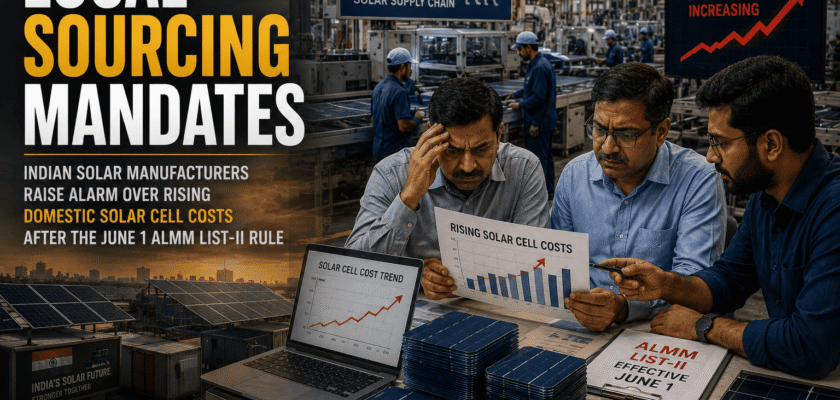
Local Sourcing Mandates: Why June 1 Became a Turning Point
Local sourcing mandates became one of India’s most important clean-energy business stories after the ALMM List-II requirement for solar cells took effect on June 1, 2026.
The rule requires specified projects commissioned after the deadline to use solar cells from approved domestic manufacturers. The objective is to reduce import dependence, improve supply-chain security and build a stronger Indian manufacturing ecosystem.
However, module manufacturers and project developers warn that domestic cell supply is still tighter and more expensive than imported alternatives. This creates a difficult transition: India wants stronger local production, but the market must absorb higher costs and limited availability before new factories fully scale.
What ALMM List-II Actually Does
The Approved List of Models and Manufacturers, or ALMM, was first used for solar modules. List-II extends the approved-manufacturer framework to solar cells.
Solar cells are the core components that convert sunlight into electricity. Manufacturers assemble these cells into modules or panels.
From June 1, affected projects need:
- ALMM-listed modules
- Cells sourced from ALMM List-II manufacturers
- Documentation proving compliance
- Approved project commissioning timelines
- Traceable domestic sourcing
The rule does not simply require panel assembly in India. It pushes localization deeper into the manufacturing chain.
Which Projects Are Directly Affected
Government clarification says projects commissioned after June 1 under specified net-metering and open-access categories must comply with ALMM List-II.
These include many:
- Rooftop solar projects
- Commercial and industrial open-access projects
- Net-metered installations
- Government-supported schemes
- Projects using regulated procurement channels
Projects commissioned before the deadline received exemption under the existing framework, while case-specific relief can protect investments already committed.
Why Manufacturers Raised the Alarm
Module makers say India has far more module-assembly capacity than domestic cell capacity.
Reuters reported industry estimates of around 25.6 GW of domestic cell manufacturing capacity against annual demand near 50 GW. More than 90% of India’s cell requirements had traditionally been met through imports, mainly from China.
This mismatch can cause:
- Cell shortages
- Higher input prices
- Production delays
- Reduced module utilization
- Working-capital pressure
- Contract disputes
- Project commissioning delays
- Higher solar tariffs
The concern is strongest among smaller manufacturers without their own cell plants.
Why Module Capacity and Cell Capacity Are Different
A module plant assembles cells into finished panels. A cell plant involves more complex technology, capital, process control and supply-chain inputs.
India expanded module capacity faster because module assembly is easier to establish. Cell manufacturing needs:
- Larger capital investment
- Process technology
- High-quality wafers
- Specialized equipment
- Reliable utilities
- Skilled technicians
- Yield optimization
- Longer commissioning periods
This explains why domestic module capacity can look abundant while approved cell supply remains tight.
The Cost Gap With Imported Cells
Imported Chinese solar cells have benefited from large scale, intense competition and steep global price declines.
Earlier Reuters analysis noted that Indian modules made with domestic cells could cost far more than Chinese alternatives. When local supply is limited, approved domestic cell prices can rise further.
Higher cell cost can flow into:
- Module selling prices
- Rooftop installation cost
- Commercial power tariffs
- Project financing needs
- Payback periods
- Consumer adoption
The policy may strengthen manufacturing in the long run, but the transition can be expensive.
Rajasthan Cost Warnings
Industry participants in Rajasthan warned that project costs could rise by more than 30% under the local-cells-only policy.
That figure should not be treated as a universal national increase. Actual impact depends on:
- Module technology
- Contract timing
- Cell supplier
- Project size
- Financing cost
- State taxes
- Inventory position
- Imported stock already available
Still, the warning shows how strongly developers fear immediate supply pressure.
Why the Government Rejected a Blanket Extension
The Ministry of New and Renewable Energy said no blanket extension beyond June 1 was required after stakeholder consultation.
The policy logic includes:
- Supporting domestic manufacturers
- Reducing Chinese import dependence
- Improving energy security
- Encouraging new cell factories
- Creating local jobs
- Protecting consumers through approved suppliers
- Building an integrated solar ecosystem
The government also allowed case-to-case relief where investments were already made, trying to balance industrial policy with project protection.
The Industry’s Request for More Time
Some manufacturers and industry groups asked for a delay of around nine months. They argued that additional domestic capacity was under construction and could ease the shortage if enforcement waited.
Their case was based on:
- Plants still being commissioned
- Technology qualification delays
- Limited approved suppliers
- Long-term contracts signed earlier
- Existing imported-cell inventory
- Risk of project cancellations
- Higher power tariffs
The government chose transition discipline over a broad postponement.
Can Domestic Supply Catch Up in 2026?
Cell manufacturers say current demand can be met as new capacity ramps up. The first ALMM List-II was issued in July 2025 and has been revised several times as more manufacturers and models were approved.
Supply could improve through:
- New factory commissioning
- Better capacity utilization
- Technology upgrades
- Faster ALMM approvals
- Integrated module-cell plants
- Production-linked incentives
- Stronger domestic wafer supply
The key question is not only nameplate capacity. Actual usable output, technology compatibility and delivery reliability matter.
Why Small Module Makers Face More Pressure
Large integrated companies can manufacture cells and modules or secure long-term supply. Smaller module assemblers may depend on spot purchases.
They face:
- Weak bargaining power
- Higher cell prices
- Uncertain delivery
- Lower factory utilization
- Cash-flow stress
- Difficulty meeting contracts
- Loss of customers to integrated players
This may accelerate consolidation in the solar-manufacturing sector.
Market Consolidation Risk
A localization policy can strengthen the industry while also concentrating it.
Large companies may gain because they have:
- Integrated factories
- Better financing
- Supplier relationships
- Technology access
- Compliance teams
- Larger inventories
- Stronger government-project eligibility
Smaller firms may need partnerships, mergers, niche products or contract manufacturing to survive.
Why Rooftop Solar Buyers Should Care
Rooftop customers may see higher quotations or longer delivery times.
Homeowners and businesses should check:
- Whether the quoted module complies with ALMM requirements
- Whether domestic cells are included
- The module warranty
- Installation timeline
- Subsidy eligibility
- Price-validity period
- Replacement availability
- Expected payback period
A very cheap quote may not meet the required sourcing rules.
Impact on PM Surya Ghar and Net Metering
Net-metering projects are important because consumers use rooftop generation to reduce electricity bills and export surplus power.
Higher module costs can affect:
- Household affordability
- Installer margins
- Subsidy effectiveness
- Payback period
- Rooftop adoption speed
- Financing demand
Policy success will depend on whether domestic manufacturing scales quickly enough to keep consumer costs manageable.
Impact on Commercial and Industrial Solar
Commercial and industrial users often choose open-access solar to reduce power cost and meet sustainability targets.
The new rule may change:
- Project tariff bids
- Power-purchase agreements
- Commissioning schedules
- Corporate decarbonization budgets
- Developer margins
- Lender risk assessments
Companies may need to revise project economics if contracts were based on cheaper imported-cell assumptions.
Why Cell Technology Matters
Not all solar cells are equal.
Projects may use:
- PERC cells
- TOPCon cells
- HJT cells
- Bifacial designs
- Different wafer sizes
- Different efficiency classes
Industry groups warned that some domestic capacity uses older technology, which can reduce the amount of suitable supply for modern high-efficiency projects.
A policy based only on total gigawatts can miss technology compatibility.
The Role of Monthly Price Reporting
MNRE asked ALMM-listed cell and module manufacturers to submit monthly price ranges to the National Institute of Solar Energy.
This can help:
- Improve transparency
- Monitor sudden price spikes
- Identify profiteering
- Track domestic-market trends
- Support policy decisions
- Protect project developers
Price monitoring does not automatically lower costs, but it gives the government better evidence.
Working-Capital Pressure
Higher input costs increase the amount of cash manufacturers need to buy inventory.
A module company may face:
- Larger advance payments
- Longer inventory cycles
- Higher borrowing
- Delayed customer payment
- Margin compression
- Contract penalties
Small firms can become financially stressed even when demand is strong.
Contract Renegotiation Risk
Projects signed before June 1 may have assumed imported-cell pricing. If commissioning occurs after the deadline, compliance and cost assumptions may change.
Contracts should clarify:
- Change-in-law treatment
- Price escalation
- Approved brands
- Delivery delays
- Force majeure
- Commissioning responsibility
- Penalty sharing
Poor contract language can create disputes between developers, manufacturers and buyers.
Why Local Sourcing Can Help Long Term
Despite short-term pain, domestic cell manufacturing can create major benefits.
Potential gains include:
- Reduced import risk
- Local employment
- Better supply visibility
- Stronger technology capability
- More resilient energy security
- Domestic value addition
- Export opportunity
- Faster replacement supply
The challenge is managing the transition without slowing solar deployment.
The China Dependence Problem
India’s earlier dependence on imported Chinese cells created exposure to:
- Price changes
- Trade restrictions
- Shipping disruptions
- Currency movement
- Geopolitical risk
- Supplier concentration
- Technology access
Local sourcing reduces some external risk, but it can create temporary domestic concentration until more manufacturers enter.
What Manufacturers Should Do
Module makers can respond by:
- Signing long-term cell contracts
- Partnering with cell manufacturers
- Investing in backward integration
- Improving working-capital planning
- Standardizing cell formats
- Diversifying approved suppliers
- Tracking monthly price data
- Renegotiating customer contracts
- Improving efficiency to offset cost
Waiting for policy reversal is not a complete strategy.
What Project Developers Should Do
Developers should:
- Confirm applicability
- Verify ALMM status
- Recalculate project cost
- Update lender assumptions
- Secure cell-linked module supply
- Review commissioning deadlines
- Add change-in-law clauses
- Maintain procurement records
- Communicate with customers early
Compliance mistakes can threaten project eligibility and financing.
What Policymakers Should Watch
The government should monitor:
- Actual cell output
- Price movement
- Project delays
- Small-manufacturer closures
- Technology availability
- Rooftop adoption
- Tariff increases
- Market concentration
- Quality complaints
- New capacity commissioning
A localization policy needs active market management during its early phase.
A 10-Point Buyer Checklist
Before ordering modules after June 1, check:
1. Is the module on ALMM List-I?
2. Are its cells sourced from ALMM List-II?
3. Does the project category require compliance?
4. Is the commissioning date clear?
5. Is the supplier’s capacity confirmed?
6. Is the price fixed or variable?
7. What happens if cells are delayed?
8. Is warranty support available?
9. Are efficiency specifications suitable?
10. Is all sourcing documentation retained?
This reduces compliance and supply risk.
Final Verdict
Local sourcing mandates are reshaping India’s solar-manufacturing market from June 1, 2026.
The policy aims to build energy security and domestic industrial capacity, but module makers are warning about a near-term mismatch between approved cell supply and annual demand. That mismatch can raise prices, delay projects and place smaller manufacturers under pressure.
In simple words, the policy’s long-term direction is clear, but the short-term transition is difficult.
Its success will depend on how quickly domestic cell plants deliver reliable high-efficiency output, how transparently prices are monitored and how well the government protects solar deployment from avoidable disruption.


