
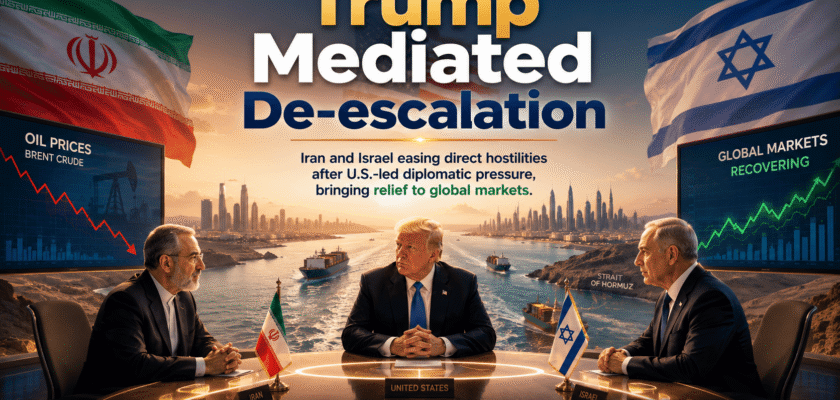
Trump Mediated De-escalation: Why Markets Responded So Quickly
Trump mediated de-escalation became a major global market story after Iran and Israel said they had halted attacks on each other. The pause followed fresh U.S. diplomatic pressure and public statements from Donald Trump that both sides were seeking an immediate ceasefire.
Markets reacted quickly because the conflict had threatened oil supplies, shipping lanes, Gulf airports, energy infrastructure and investor confidence.
The relief was immediate, but it was not complete. The truce remains conditional, and tensions involving Lebanon, Hezbollah and the Strait of Hormuz continue.
What Happened Between Iran and Israel
Iran and Israel moved toward a temporary halt in direct attacks after a fresh exchange of missiles and airstrikes.
Reuters reported that:
- Trump said both sides were looking for an immediate ceasefire
- Iran announced an end to its latest wave of attacks
- Israel agreed to hold fire against Iran
- Iran warned that attacks could resume if Israel continued strikes linked to Hezbollah
- The broader peace agreement remained under negotiation
This was a pause in escalation, not a final peace settlement.
Why Trump’s Role Mattered
Trump used direct public pressure and U.S. diplomatic leverage to push both sides toward restraint.
His role mattered because Washington influences:
- Israeli military decision-making
- Sanctions policy toward Iran
- Gulf security arrangements
- Strait of Hormuz negotiations
- Regional ceasefire talks
- Energy-market confidence
A U.S.-backed pause carries more weight than an informal statement from either side acting alone.
Why the Truce Is Still Fragile
Iran linked the durability of the pause to Israeli actions in Lebanon. Israel also maintained that it could respond to threats involving Hezbollah.
The truce could weaken because of:
- New attacks in Lebanon
- Missile or drone launches
- Miscalculation
- Maritime incidents
- Disputes over the Strait of Hormuz
- Nuclear negotiations
- Domestic political pressure
- Conflicting ceasefire interpretations
Investors therefore treated the development as positive but temporary.
Gulf Stock Markets Rebounded
Major Gulf stock markets rose after the halt in attacks.
Reuters reported gains including:
- Saudi Arabia’s main index up about 1%
- Dubai’s index up about 1.1%
- Abu Dhabi’s index up about 0.8%
- Qatar’s index up about 2%
Banks and property companies led parts of the recovery because lower geopolitical risk improves confidence in lending, investment, travel and construction.
Why Oil Prices Fell
Oil prices dropped as investors reduced the probability of an immediate supply shock.
Brent crude moved lower after Iran and Israel announced the pause. The market had previously added a risk premium because of:
- Strait of Hormuz disruption
- Iranian attacks
- Gulf airport damage
- Threats to shipping
- Possible wider war
- Higher insurance costs
When the risk of direct escalation fell, part of that premium disappeared.
The Strait of Hormuz Still Matters
The biggest unresolved market risk remains the Strait of Hormuz.
This route carries a major share of global oil and gas trade. Even without a full closure, uncertainty can increase:
- Freight costs
- Marine insurance
- Delivery delays
- Oil volatility
- Inflation expectations
- Airline fuel costs
Washington continues to push for improved shipping access, while Iran sees the strait as a major strategic bargaining tool.
Wall Street Futures Improved
U.S. stock index futures moved higher as geopolitical risk eased.
Reuters reported that:
- Dow futures rose
- S&P 500 futures gained
- Nasdaq futures showed the strongest increase
- Chip stocks extended gains
- Oil prices moved lower
Technology shares benefited because lower energy risk and reduced geopolitical tension can support investor appetite for growth assets.
Why the Nasdaq Reacted Positively
Technology stocks are sensitive to both interest rates and global risk.
The easing of Iran-Israel tension helped because it reduced concerns about:
- Oil-driven inflation
- Supply-chain disruption
- Global recession risk
- Higher operating costs
- Sudden investor flight to safety
However, tech stocks still faced pressure from valuation concerns and stronger U.S. jobs data.
The Indian Rupee Recovered
The Indian rupee strengthened as oil prices eased and geopolitical fear reduced.
India imports a large share of its crude oil. Lower oil prices can help by:
- Reducing the import bill
- Lowering dollar demand
- Improving inflation expectations
- Supporting market confidence
- Reducing pressure on the current account
The rupee’s rebound showed how Middle East conflict can directly affect Indian financial conditions.
Why India Is Sensitive to West Asia Tensions
India is exposed through:
- Crude oil imports
- LNG supply
- Shipping routes
- Gulf remittances
- Airline traffic
- Foreign investment
- Fertilizer prices
- Trade corridors
Any reduction in regional tension can improve India’s market outlook, although the benefit depends on whether the truce lasts.
Gold and Safe-Haven Assets
Safe-haven assets can lose some demand when geopolitical fear falls.
Investors may move away from:
- Gold
- U.S. dollars
- Defensive bonds
- Low-risk sectors
They may return toward:
- Equities
- Emerging markets
- Technology shares
- Banks
- Real estate
- Travel stocks
This rotation can be fast when the news changes suddenly.
Airlines and Travel Companies Benefit
Lower crude prices and reduced airspace risk can help airlines.
Possible benefits include:
- Lower fuel costs
- Fewer route diversions
- Better Gulf connections
- Reduced insurance cost
- Stronger passenger confidence
- More stable schedules
However, airlines still need confirmation that airspace and airport operations are safe.
Shipping Markets Remain Cautious
Shipping companies will not treat one ceasefire announcement as a complete solution.
They still monitor:
- Naval alerts
- Hormuz access
- Port restrictions
- Missile and drone risk
- Insurance exclusions
- Crew safety
- Route delays
- Escort requirements
The market relief can disappear quickly after one new attack.
Why Banks and Real Estate Gained in the Gulf
Banks and real-estate companies often benefit when regional risk falls.
Lower tension can support:
- Lending activity
- Property transactions
- Tourism
- Corporate expansion
- Project financing
- Foreign investment
- Consumer confidence
This explains why large banks and developers helped lead the Gulf-market rebound.
What the Ceasefire Means for Inflation
If oil prices continue to fall, inflation pressure may ease.
Lower energy prices can reduce costs for:
- Transport
- Manufacturing
- Food logistics
- Airlines
- Chemicals
- Electricity generation
- Household fuel
Central banks may gain more flexibility when energy inflation falls, although wage and domestic price pressures still matter.
Why Markets Can Reverse Quickly
Markets react to expectations, not only confirmed outcomes.
A fresh strike could quickly cause:
- Oil prices to jump
- Stocks to fall
- Gold to rise
- The dollar to strengthen
- Airline shares to weaken
- Gulf markets to reverse
This is why investors should not treat the pause as permanent peace.
What Investors Should Watch Next
Important signals include:
- Direct Iran-Israel military statements
- Israeli action in Lebanon
- Hezbollah activity
- Strait of Hormuz shipping
- U.S.-Iran negotiations
- Oil-market movement
- Gulf airport operations
- New sanctions
- Ceasefire verification
- Trump administration statements
The next market direction will depend on whether diplomacy becomes enforceable.
A Simple Market Checklist
Investors should review:
1. Energy exposure
2. Airline holdings
3. Gulf-market positions
4. Currency risk
5. Gold allocation
6. Technology concentration
7. Shipping and logistics exposure
8. Oil-sensitive sectors
9. Emergency cash
10. Portfolio diversification
Do not make a major investment decision based only on one day of relief.
Final Verdict
Trump mediated de-escalation brought welcome relief to global markets because it reduced the immediate risk of a wider Iran-Israel war.
Gulf stocks rebounded, Wall Street futures improved, the Indian rupee strengthened and oil prices moved lower. These reactions showed how strongly markets had priced in energy and shipping disruption.
In simple words, the pause reduced fear—but did not remove the conflict.
The truce remains fragile, the Strait of Hormuz remains unresolved and fighting linked to Lebanon could quickly restart direct confrontation. Investors should welcome the relief while keeping portfolios prepared for renewed volatility.


