
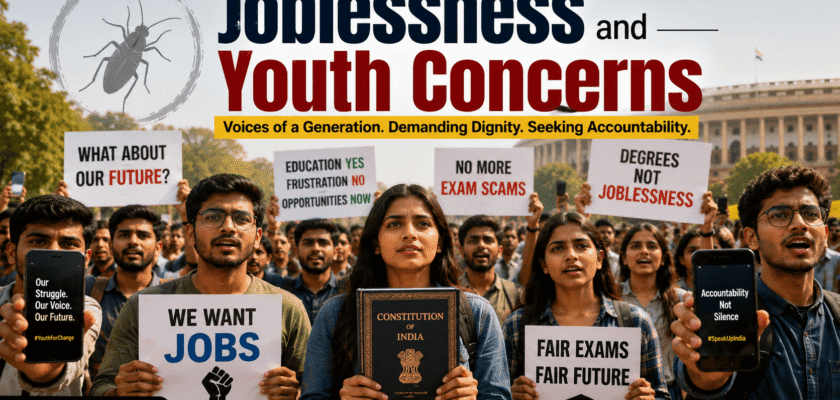
1. Why the CJP Debate Matters After the Polls
CJP youth concerns have moved from social-media satire into mainstream political discussion. The movement’s rise shows that post-poll public debate is no longer controlled only by established parties, television panels or formal student organisations.
Young Indians are using short videos, memes, live streams and peaceful gatherings to discuss joblessness, examination failures, rising living costs and weak institutional accountability. CJP’s unusual name attracts attention, but the issues underneath it are serious.
2. From Satire to a National Youth Symbol
The movement began after remarks about unemployed youth triggered online anger. Founder Abhijeet Dipke turned the insult into a symbol of survival and collective frustration.
Within weeks, the movement gained millions of followers and organised its first Delhi protest. This rapid shift showed how digital humour can become real political pressure when it connects with lived problems.
3. What “Apolitical” Means in the CJP Context
CJP is often described as apolitical because it has not presented itself as a conventional electoral party, has not announced candidates and focuses on issues rather than a fixed ideology.
But issue-based activism still influences politics. When a movement demands a minister’s resignation, challenges government policy or shapes opposition meetings, it becomes part of political discourse even without contesting elections.
4. The Main Youth Concerns Driving the Movement
The CJP conversation is built around a cluster of connected anxieties.
✓ Youth unemployment and underemployment
✓ Paper leaks, grading errors and repeated examinations
✓ High coaching and education costs
✓ Weak transition from degree to stable work
✓ Rising living expenses and low entry-level salaries
✓ Feeling ignored by conventional political parties
5. Joblessness Is the Core Pressure Point
Reuters reported that the movement’s rise was closely linked to job insecurity and unemployment among students and young graduates. Government data has shown youth unemployment to be much higher than the overall national rate.
The frustration is not only about having no job. Many young people also face underemployment, low salaries, unstable contracts and work that does not match their education.
6. Why Exam Failures Become Political
Entrance tests and government recruitment exams can determine a young person’s entire career. Paper leaks, grading errors, delayed results and repeated tests create financial and emotional damage.
For families that spend heavily on coaching, travel and application fees, an exam failure by the system feels like a direct loss of opportunity.
7. Post-Poll Politics Is Listening to the CJP
The Times of India reported that CJP’s influence was discussed during an INDIA bloc meeting even though the movement was not formally represented in the room.
This is important because it shows that established political parties are studying how to respond to digital-first youth anger. The movement may not hold seats, but it can change the questions parties are forced to answer.
8. Why Traditional Parties Find CJP Difficult to Read
Traditional political organisations usually have formal leaders, district offices, funding structures and clear ideological positions. CJP operates differently.
Its strengths are speed, humour, decentralised participation and emotional identification. Its weaknesses include unclear organisation, dependence on social platforms and difficulty converting followers into long-term local action.
9. The Ruling Party’s Response
BJP leaders have criticised the movement and warned that people based abroad may be drawing young Indians toward negative politics. Other government figures have questioned foreign influence and the credibility of online mobilisation.
These responses show that the movement is being treated as more than a joke. At the same time, allegations of foreign influence require evidence and should not replace discussion of the underlying youth concerns.
10. Opposition Parties See an Opportunity—and a Risk
Opposition parties may benefit from rising anger over jobs and education, but they cannot assume that CJP supporters will automatically join them.
A movement that distrusts the establishment may also distrust established opposition parties. Young voters may demand specific commitments, transparent candidate selection and measurable employment policies rather than broad anti-government slogans.
11. Why Digital Followers Are Not the Same as Votes
A social-media account can grow quickly, but electoral influence requires voter registration, local networks, booth-level organisation and consistent participation.
Online support may include curious viewers, international followers, duplicate accounts and people who enjoy satire without supporting political action. Real influence should be measured through sustained engagement, not follower counts alone.
12. The AI and Automation Risk
Economic Times reporting has raised concerns that AI-generated content and coordinated digital swarms could automate parts of political mobilisation.
AI can help movements create posters, translate messages and organise volunteers. It can also amplify misinformation, fake support and emotional manipulation. Transparency about automated content will become increasingly important.
13. Why Peaceful Mobilisation Matters
CJP organisers have repeatedly promoted peaceful demonstrations and controlled public gatherings. This helps the movement protect credibility and avoid turning legitimate youth concerns into a law-and-order controversy.
Peaceful discipline also makes it harder for opponents to dismiss the movement as chaos.
14. What Meaningful Youth Policy Would Look Like
A serious response needs more than speeches. It should connect education, employment, skills and institutional accountability.
✓ Time-bound investigations into examination leaks
✓ Transparent recruitment calendars
✓ Apprenticeships connected to real employers
✓ Better career guidance and labour-market data
✓ Support for first-time entrepreneurs and micro-enterprises
✓ Public reporting on promised and created jobs
15. What CJP Must Do to Remain Credible
Viral popularity can disappear quickly. The movement will need transparency and structure if it wants lasting influence.
✓ Publish clear issue positions
✓ Disclose funding and major partnerships
✓ Verify statistics before posting
✓ Create accountable local teams
✓ Reject harassment and misinformation
✓ Track government responses instead of only creating viral content
16. A Quick Public-Discourse Scorecard
The movement’s impact can be judged across five areas: issue visibility, policy response, peaceful participation, organisational transparency and long-term youth engagement.
17. Final Verdict
CJP youth concerns are shaping India’s post-poll public discourse because they connect several problems that young people experience together: joblessness, exam failures, affordability, weak trust and limited political representation.
The movement calls itself issue-based and outside conventional party politics, but its influence is now clearly political. It is being discussed by ruling-party leaders, opposition strategists and national media.
In simple words, CJP’s future will not depend only on memes or follower numbers. It will depend on whether it can remain peaceful, transparent, evidence-based and focused on practical reforms for young Indians.
| Area | Current Signal | What to Watch |
| Issue visibility | High | Does joblessness stay central? |
| Offline mobilisation | Emerging | Can protests expand peacefully? |
| Policy impact | Unclear | Do parties announce measurable reforms? |
| Organisation | Developing | Are leaders and funds transparent? |
| Electoral influence | Unproven | Can online support affect voting behaviour? |


