
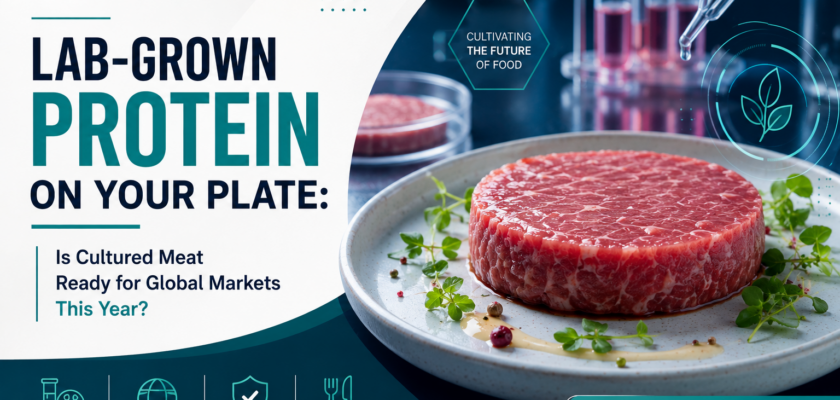
Lab-Grown Protein on Your Plate: Is Cultured Meat Ready for Global Markets This Year?
The narrative surrounding cellular agriculture has undergone a radical, uncompromised reality check. For years, the alternative protein sector operated on a wave of idealistic promises. The media was filled with predictions of a sudden, total transformation of the global food chain—promising that traditional livestock farming would be rapidly replaced by clean, lab-grown steaks available at every local supermarket.
However, as we move through May 2026, the industry has fundamentally shifted from ideological hype to brutal cost realism. The ambitious dream of deploying a singular technology platform capable of serving premium whole-cuts, cheap commodity mince, and mass retail simultaneously has largely collapsed under its own operational weight.
The Lab Grown Meat Market 2026 landscape is no longer driven by speculative venture capital, but by constraint, narrow lanes, and pragmatic engineering. While breakthroughs in cellular multiplication continue to advance, a complex matrix of scaling bottlenecks, soaring growth media costs, and aggressive legislative pushback is reshaping the timeline.
Is cultured meat truly ready to land on global plates this year, or is the industry stepping back to build a more realistic foundation? Let’s analyze the hard data, regulatory changes, and production economics defining the alternative protein arena today.
1. The Current State of Global Regulatory Approvals
While the mass-market rollout remains localized, the regulatory dam is steadily breaking. To date, 12 active companies have secured official safety and commercial clearance to sell cultured cells across six distinct nations and the European Union.
                 [ Global Cultured Meat Footprint: May 2026 ]
                                      │
         ┌────────────────────────────┼────────────────────────────┐
         ▼                            ▼                            ▼
┌──────────────────────────┐ ┌──────────────────────────┐ ┌──────────────────────────┐
│   Pioneering Hubs        │ │   Expanding Footprints   │ │   The Backlash Front     │
│ • Singapore: First sales │ │ • UK: Pet food approved  │ │ • US: Federal pauses     │
│ • Australia & NZ cleared │ │ • Israel: Steak cleared  │ │ • South Dakota: 5-year   │
│ • Japan: Over 30 pilots  │ │ • EU: Conservative review│ │   prohibition enacted    │
└──────────────────────────┘ └──────────────────────────┘ └──────────────────────────┘
- The Asian Test Kitchens: Singapore remains the undisputed epicenter of commercial testing, actively integrating alternative proteins into its national food security roadmaps. Concurrently, Japan, South Korea, and China have established over 30 pilot production facilities to insulate their urban centers from traditional meat import liabilities.
- The UK and Middle Eastern Inroads: The United Kingdom has carved out a unique position by approving cultivated inputs for the premium pet food ecosystem. In Israel, companies like Aleph Farms have successfully brought the first cell-cultured beef steaks into select culinary test-environments.
- The American Regulatory Backlash: In stark contrast to the initial approvals granted by the USDA and FDA in 2023, the domestic US market has hit severe legislative roadblocks. As of mid-2026, active human-consumption manufacturing has ground to a halt due to intense pushback from agricultural states. States like South Dakota have officially signed five-year prohibitions (effective through June 2031) on the manufacture, sale, or distribution of cell-cultured proteins to protect legacy cattle interests.
2. The Economic Bottleneck: The Cost of Growth Media
The primary factor holding back the Lab Grown Meat Market 2026 from hitting mass grocery shelves is a steep production expenditure hurdle. The cell cultivation process requires submerging starter cells into a nutrient-rich fluid—the growth media—that mimics an animal’s internal vascular system to stimulate cellular division.
The Media Expense Crisis
Industrial data reveals that growth media represents a staggering 55% to 95% of total production costs. Historically dependent on ultra-expensive, pharmaceutical-grade inputs like fetal bovine serum, early-stage cultured meat products carried an impossible price tag of $200 to $300 per kilogram.
While the development of serum-free, plant-based media alternatives has successfully dragged real-world production costs down to roughly $20 to $50 per kilogram, price parity with conventional beef ($15 to $20 per kg) remains a massive obstacle.
Furthermore, over 25% of pilot production batches continue to fail basic sensory and texturing tests, highlighting the deep technical difficulties of scaling up biological processes from small lab vials to massive 20,000-liter industrial bioreactors.
3. Strategic Matrix: Production Models in Alternative Proteins
| Operational Metric | Laboratory/Pilot Scale (Pre-2025) | Commercial Realism Framework (2026) |
| Product Target | 100% pure, whole-cut structured steaks | Hybrid products (Cellular + Plant-based blends) |
| Bioreactor Capacities | Small-batch 100 to 2,000 liters | Industrial 10,000 to 20,000 liters |
| Growth Media Source | High-cost pharmaceutical serum variants | Serum-free, plant-based alternatives |
| Distribution Strategy | Hype-driven, immediate mass retail targets | Controlled restaurant laboratories & pet food lines |
| Primary Risk Layer | Extreme financial burn rate & scale failure | Minimized Risk via lane-focus & cost visibility |
4. The 2026 Solution: The Rise of Hybrid Foods
To survive this complex macroeconomic climate, the most successful companies have abandoned pure technological idealism. They realize that waiting for the perfect, low-cost 100% lab-grown steak is an operational liability that risks complete bankruptcy before the tech can mature.
The saving grace of the Lab Grown Meat Market 2026 is the explosive growth of Hybrid Offerings.
Instead of trying to grow an entire muscle structure entirely in a lab, manufacturers are blending cultured animal cells (ranging from 10% to 30% of the final product volume) directly into high-quality plant-based protein structures.
Why Hybrids Work Natively:
- Immediate Cost Optimization: Blending plant-based proteins instantly slashes production expenditures, allowing brands to approach commercial pricing structures without needing a miracle breakthrough in bioreactor engineering.
- Solving the Sensory Puzzle: Plant proteins provide a reliable structural foundation, while the lab-grown animal cells inject authentic animal fats, heme, and complex lipids. This results in a product that matches the exact aroma, cooking texture, and flavor profile of real meat—passing rigorous consumer sensory tests that 100% plant-based substitutes frequently fail.
- Accelerated Regulatory Paths: Because the total cellular density is lower and uses pre-vetted plant foundations, hybrid configurations enjoy significantly faster safety approvals from international food safety panels.
Conclusion
Is cultured protein ready for global grocery shelves this year? The short answer is: No, but it is firmly on the path to commercial viability. The illusion of a sudden, worldwide alternative protein revolution has evaporated, replaced by a much healthier foundation of scientific discipline, cost transparency, and targeted applications.
By focusing on controlled restaurant partnerships as validation laboratories, entering high-margin alternative tracks like premium pet food, and utilizing hybrid configurations to optimize costs, the industry is securing long-term survival.
The global market size is projected to climb past $1.3 billion this year, proving that while growth isn’t explosive, it is highly structural. The lab-grown protein movement is stepping away from short-term media hype and building the actual mission-critical infrastructure needed to feed our future food systems.


