
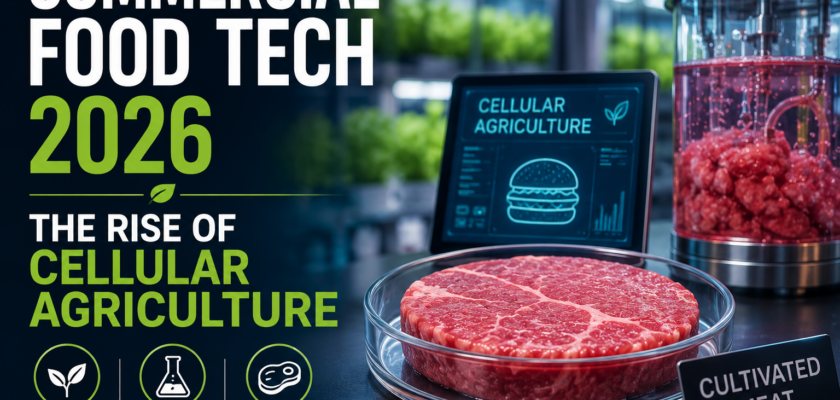
Beyond Meat Alternatives: The Rapid Rise of Cellular Agriculture in Modern Cloud Kitchens.
The alternative protein landscape is undergoing a profound biological evolution. For the past decade, the first wave of the meatless revolution was completely anchored in plant-based chemistry. Food scientists relied heavily on processing soy, pea, and wheat isolates to mimic the sensory profiles of traditional livestock. While these first-generation meat alternatives successfully captured a segment of the health-conscious market, they faced a persistent physical limitation: no matter how complex the plant-based formulation, reproducing the precise structural bite, complex fat melting points, and rich umami bleeding profile of genuine animal tissue remained incredibly difficult.
But as we march through 2026, the focus of the global food system is shifting from imitation to exact replication. We have officially entered the era of true commercial food tech 2026 integration, driven by the explosive rise of cellular agriculture.
Instead of processing plant crops to look like meat, biotech companies are using tissue engineering, specialized cell-line technologies, and advanced bioreactors to cultivate genuine animal muscle and fat cells outside of a living animal.
Crucially, this technology is breaking out of expensive laboratory settings and finding its perfect commercial launchpad: the delivery-only cloud kitchen. By bypassing the heavy real estate overhead of traditional dine-in restaurants, delivery-focused virtual brands are becoming the primary gateway bringing cultivated proteins straight to urban consumers.
1. The Cultivated Leap: Real Cells vs. Plant Formulations
To understand why cellular agriculture is capturing the culinary spotlight, we must look at the underlying science of taste. Plant-based alternatives require an extensive list of binders, texturizers, and added sodium to simulate the familiar bite of meat. For many consumers experiencing screen and diet overstimulation, these hyper-processed ingredient labels have created a sense of clean-label fatigue.
                    [ The Alternative Protein Architecture ]
                                       │
         ┌─────────────────────────────┴─────────────────────────────┐
         ▼                                                           ▼
┌──────────────────────────────────┐                ┌──────────────────────────────────┐
│   First-Gen Plant Alternatives   │                │   Next-Gen Cellular Agriculture  │
│ ❌ Fragmented plant texturizers   │                │ ✅ Molecularly identical cells   │
│ ❌ Excess binders & high sodium   │                │ ✅ Natural animal muscle & fats  │
│ ❌ Artificial flavor additives   │                │ ✅ 100% clean, antibiotic-free   │
│ ❌ Misses the true fat melt snap │                │ ✅ Authentic culinary performance│
└──────────────────────────────────┘                └──────────────────────────────────┘
         │                                                           │
         └─────────────────────────────┬─────────────────────────────┘
                                       ▼
                       [ The Delivery-Only Solution ]
           (Hyper-Efficient AI Cloud Kitchens ──► On-Demand Food Distribution)
Cellular agriculture eliminates these artificial layers completely by producing molecularly identical meat, dairy, and seafood products. Because cultivated tissue is grown under hyper-regulated, sterile bioprocessing environments, it contains the exact same amino acids, fatty acid channels, and nutritional density as conventional livestock—without a single trace of antibiotics, growth hormones, or slaughter waste.
For a chef, this means the protein performs exactly as expected on a blazing induction grill: it caramelizes perfectly via the Maillard reaction, releases authentic aromas, and locks in natural juices, providing a premium gastronomic proposition that doesn’t ask consumers to compromise on flavor.
2. Why Cloud Kitchens Are the Ultimate Gateway for Lab-Grown Food
Introducing a cutting-edge, highly innovative food technology to the mass market requires a distribution channel that values speed, flexibility, and data-driven menu management. Traditional brick-and-mortar restaurants are poorly suited for this initial rollout; their fixed menus, massive dining room footprints, and high labor costs make experimenting with new ingredients an expensive risk.
This is exactly why commercial food tech 2026 models are converging so heavily on multi-brand cloud kitchens.
  [ Cellular Production Plant ] ───► [ Hyperlocal AI Cloud Kitchen ] ───► [ Direct On-Demand Delivery ]
    • Scaled Bioreactor Yields           • Zero Dining Room Overhead          • Automated Mobile Ordering
    • 100% Traceable Ingredients         • Micro-Brand Flexible Menus         • Fresh, Rapid Doorstep Drops
Cloud kitchens operate as specialized, delivery-only culinary production facilities.
By completely removing the overhead of premium storefront locations and customer service staff, these spaces can reallocate their capital budgets to source high-end, sustainable cellular ingredients.
Furthermore, cloud kitchen operators rely heavily on real-time data analytics and AI-driven menu optimization to track shifting neighborhood demand patterns. If data indicates that a specific metropolitan grid has a high concentration of health-conscious or environmentally aware consumers, a cloud kitchen can launch a brand-new virtual cultivated meat brand on food delivery platforms within hours. This asset-light model allows the industry to bypass the slow abacus maze of traditional retail distribution, scaling the availability of cell-based foods in a highly flexible, cost-effective way.
3. Strategic Matrix: Plant Alternatives vs. Cellular Agriculture Cloud Kitchens
| Operational Vector | Legacy Plant-Based Alternative Brands | Cellular Agriculture Cloud Kitchens (2026) |
| Material Composition | Processed soy, pea, wheat, and gluten isolates | Genuine, cultivated animal muscle and fat cells |
| Culinary Performance | Prone to drying out; limited fat melting points | Authentic sizzle, snap, caramelization, and juices |
| Retail Distribution | Slow, expensive physical supermarket shelves | On-demand, hyperlocal food delivery platforms |
| Menu Adaptability | Rigid, mass-manufactured package sizes | Dynamic; optimized in real time via AI systems |
| Risk Characterization | High vulnerability to consumer palate boredom | Minimized Risk; tech-driven culinary personalization |
4. Scaling Sustainability: The Circular Kitchen Framework
Beyond the undeniable technical achievement of producing meat without a pasture, the marriage of cellular agriculture and smart cloud kitchens provides an incredibly powerful shield against global environmental degradation. Traditional livestock production represents one of the most resource-heavy, carbon-intensive industrial operations on Earth, consuming massive volumes of clean water and driving widespread deforestation for grazing land.
The automated cloud kitchen framework completely cleans up this supply chain footprint. Because delivery-only facilities utilize predictive AI software to accurately forecast daily order volumes based on local consumer habits, weather changes, and regional events, their raw ingredient ordering is extraordinarily precise.
This optimization minimizes raw food spoilage and kitchen prep waste to nearly zero.
When combined with the inherent efficiency of cellular agriculture—which requires up to 90% less land and 80% less water than traditional cattle farming—the resulting circular food loop offers a highly sustainable model for urban nutrition. It proves that the ultimate way to feed our rapidly growing global cities is to build a smart, cloud-connected food network that produces less waste, utilizes fewer resources, and delivers uncompromised quality straight to the consumer’s doorstep.
Conclusion
The sweeping integration of cellular agriculture into modern cloud kitchen networks marks a permanent turning point in human food technology. It shatters the outdated, false assumption that choosing an eco-friendly diet means permanently abandoning the authentic textures, rich flavors, and culinary traditions of real meat.
By clearing away the heavy overhead, environmental waste, and supply chain vulnerabilities of traditional factory farming and replacing them with flexible, tech-driven virtual kitchens, the food sector is building a more resilient system.
The old abacus maze of worrying about resource shortages, livestock diseases, and inconsistent ingredient quality is beginning to dissolve. As cellular bioreactors and automated cloud networks continue to scale their operations globally, they offer an undeniable look at the future of dining: a world where sustainable, slaughter-free, and molecularly perfect food is cooked to order and delivered with a single click—proving that true innovation doesn’t replace nature, it learns to cultivate it smarter.


