
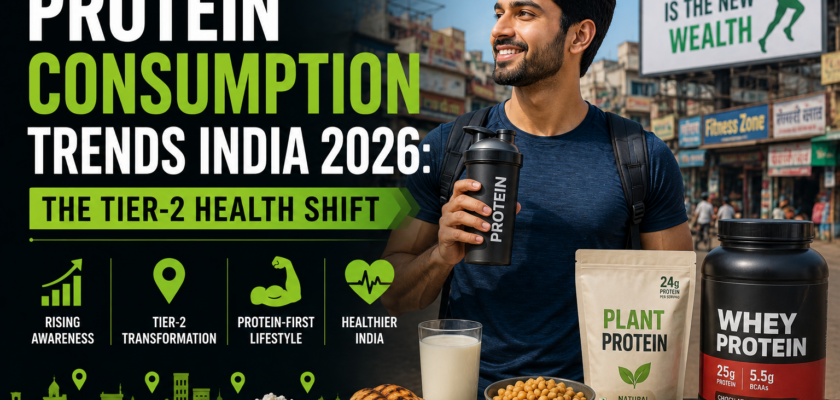
India’s Tier-II Protein Shift: Why Smaller Cities Are Witnessing Faster Supplement and Health Food Growth.
The geographical blueprint of India’s health and wellness landscape is undergoing a massive, structural transformation. For decades, the consumption of premium dietary supplements, health foods, and clean-label nutritional products was regarded as an exclusive lifestyle habit confined to Tier-1 metropolitan areas. Major international health brands focused their entire distribution pipelines on affluent consumers in cities like Mumbai, Delhi-NCR, and Bengaluru. This approach assumed that fitness awareness, a desire for balanced macronutrients, and the disposable income needed to buy wellness goods existed solely within high-density urban corridors.
However, modern distribution networks and rising consumer awareness have shattered that regional monopoly completely.
The incredible evolution defining the protein consumption trends India 2026 matrix highlights a massive migration of health capital.
Data confirms that India’s smaller cities are now experiencing a far more rapid growth rate in wellness consumption than their metropolitan peers.
Driven by an expansion of organized gym networks, rising disposable incomes, and the deep penetration of digital commerce platforms, non-metro regions are claiming their spot as the primary engines of the nation’s nutrition economy. This historic shift is permanently altering daily eating habits, giving rise to an expansive, highly accessible “clean eating” market across the country.
1. The Digital Pipeline: How E-Commerce and Gym Networks Democratized Nutrition
The primary catalyst driving this massive dietary transition is a profound shift in product accessibility. In the past, a consumer living in a Tier-2 city had to travel long distances or visit specialty lifestyle boutiques in major metros just to secure authentic, high-quality nutrition options.
In contrast, modern logistics have completely erased those geographic barriers, connecting premium health brands straight to the doors of non-urban consumers.
                    [ The Monopolized Metro Era ]
     (Restricted Store Availability ──► High Retail Surcharges ──► Isolated Metro Consumption)
                                     │
                                     ▼
                  [ The 2026 Democratized Supply Chain ]
     (Quick Commerce Rails + Direct D2C Portals + Mass Tier-2 Gym Proliferation)
                                     │
         ┌───────────────────────────┴────────────────___________┐
         ▼                                                       ▼
┌─────────────────────────────────┐                     ┌─────────────────────────────────┐
│     The Quick-Commerce Loop     │                     │     Organized Fitness Nodes     │
│ • Sub-20 minute home deliveries │                     │ • 4,000+ new non-metro gyms open│
│ • Erases local inventory limits │                     │ • Serves as active social hubs  │
│ • Eliminates long transit delays│                     │ • Drives micro-influencer logs  │
└─────────────────────────────────┘                     └─────────────────────────────────┘
These highly optimized supply chains systematically accelerate delivery timelines across rising sub-urban corridors:
- The Quick-Commerce Acceleration: The aggressive expansion of instant delivery networks allows non-metro users to buy specialized protein shakes, bars, and wellness items in under 20 minutes. This speed completely eliminates the friction of traditional shopping trips.
- The Proliferation of Gym Networks: Concurrently, India has added thousands of new fitness facilities outside major cities, with local gym memberships growing at an impressive 11% compound annual rate since 2021.
- The Social Catalyst: These modern wellness spaces function as important cultural hubs. Local trainers and regional fitness influencers use them to actively break down old myths about supplements, making daily protein intake a normal habit for the general public.
2. Rethinking the Menu: The Evolution from Gym Shakes to Everyday Snacks
As awareness of nutritional value expands deeper into the Indian household, consumer buying habits are moving past traditional, bulky tubs of whey protein powder. The clean eating market Tier 2 hubs expansion is driven by an unprecedented consumer demand for everyday, ready-to-consume food formats.
A. The Rise of Fortified Staples
Modern consumers are looking for taste and everyday convenience over extreme, high-density workout supplements.
Consequently, families are actively embracing protein-fortified variations of familiar household foods, including high-protein milk, fortified whole-wheat atta, high-protein biscuits, and nutritious snack bars.
This seamless integration allows households to bridge their nutritional gaps naturally during standard breakfast and dinner routines, avoiding the need to adopt complex or unfamiliar health regimens.
B. The Emergence of the Plant-Based Movement
Parallel to the growth of fortified staples, a highly significant shift is occurring toward alternative plant-based nutrition sources:
  [ Growing Health Literacy ] ───► [ High Incidence of Lactose Intolerance ]
                                                   │
                                                   ▼
                                    [ Plant Protein Demand Surge ]
                              "Massive Adoption of Pea, Rice, and Soy Isolates"
                                                   │
                                                   ▼
                                    [ Corporate Investment Consolidation ]
                              "FMCG Giants Acquire Digital-First Health Brands"
With medical data revealing that nearly 60% to 74% of the Indian population deals with varying degrees of lactose intolerance, consumers are systematically shifting toward easily digestible plant proteins like pea, soy, and rice isolates.
This massive consumer demand has caught the attention of the country’s largest Fast-Moving Consumer Goods (FMCG) conglomerates.
For instance, consumer giant Marico recently finalized a major corporate acquisition, securing a majority stake in the digital-first health and wellness startup Cosmix.
By backing emerging, clean-label brands with deep institutional funding and massive national distribution networks, major corporations are accelerating the flow of premium plant-based options onto grocery shelves across Tier-2 and Tier-3 cities.
3. Strategic Matrix: Metro-Centric Gym Outlets vs. 2026 Tier-2 Clean Food Hubs
| Market Dynamic Axis | Legacy Metro-Centric Sourcing (Pre-2025) | Modern Tier-2 Clean Food Hubs (2026) |
| Primary Sourcing Channel | Specialty brick-and-mortar health stores | Direct D2C portals and 20-minute quick commerce |
| Core Product Format | Large-scale, bodybuilder-focused whey tubs | Convenient, taste-optimized fortified daily foods |
| Primary Target Audience | Hardcore fitness athletes and professional bodybuilders | Mainstream families, students, and busy workers |
| Core Sourcing Source | Heavily reliant on standard dairy-derived whey lines | Rapidly diversifying into pea, soy, and oat inputs |
| Risk Characterization | High vulnerability to local market saturation traits | Withdrawn Risk; massive untapped regional demand |
4. Clinical Awareness: The Rise of Preventive Healthcare
The final core driver accelerating this monumental shift in dietary changes centers on a profound transition from reactive medicine to proactive, preventive health tracking. For decades, the average Indian household evaluated wellness through a simple, reactive lens: visiting a medical professional only after facing acute illness or severe physical discomfort.
Today, rising health literacy is shifting consumer focus toward long-term wellness preservation and nutritional defense.
  [ Rise in Metabolic Health Issues ] ───► [ Physician-Led Nutritional Screenings ]
                                                       │
                                                       ▼
                                        [ Proactive Lifestyle Adjustments ]
                                "Consumers Scan Labels for Hidden Sugar Systems"
                                                       │
                                                       ▼
                                        [ Long-Term Physical Resilience ]
                                "Daily Protein Intake Treated as Vital Guard"
This health movement is heavily supported by progressive, physician-led awareness campaigns spotlighting the widespread prevalence of muscle loss and protein deficiency across the country.
Furthermore, roughly 63% of urban and emerging non-metro consumers now actively inspect nutritional labels before buying groceries. They deliberately avoid high-sodium formulations, hidden sugar systems, and artificial chemical preservatives.
By treating consistent daily protein intake as a vital guard against lifestyle conditions, families are systematically upgrading their pantries. This cultural shift proves that the ultimate goal of modern food innovation isn’t to change traditional Indian recipes, but to enhance their nutritional value—building a healthier, more resilient society from the ground up.
Conclusion
The incredible momentum defining the protein consumption trends India 2026 landscape outlines a permanent evolution in modern lifestyle design: true wellness is no longer an elite privilege reserved for big-city metros, but a mainstream habit that is transforming every corner of the nation. The old abacus maze of treating high-quality nutrition as a niche product meant only for hardcore bodybuilders is being replaced by practical, family-friendly clean food options.
By linking quick-commerce logistics with affordable plant-based alternatives and fortified household staples, the food industry is charting a sustainable path forward.
These smart product choices don’t disrupt traditional food preferences; they add essential nutritional value to daily meals. As these clean eating habits continue to expand through smaller cities, they deliver a powerful promise for the country’s future: a world where balanced, high-quality nutrition is fully integrated into every household—proving that when you build a more accessible food system, you build a healthier nation.


