
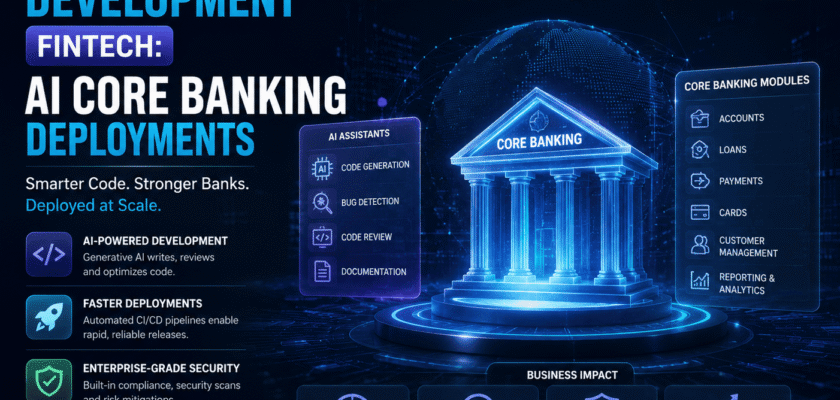
Engineering the Core: Inside the Strategic Partnership Deploying Autonomous AI Software Engineers into Global Banking.
The architectural roadmap directing international banking infrastructure is undergoing a rapid, structural transformation. For several decades, managing the core processing layers of major financial institutions relied entirely on highly specialized manual engineering teams. Enterprise developers spent their careers maintaining massive, legacy COBOL mainframes, writing complex ledger balance algorithms, and performing sensitive database migrations by hand. This traditional engineering strategy successfully preserved operational stability across global capital markets, but it left banking networks encumbered by steep code maintenance bills and slow deployment speeds.
Fortunately, modern enterprise engineering is executing a sharp pivot toward autonomous developer integration.
We have officially entered a new era marked by the introduction of automated software development fintech platforms.
Driven by an urgent corporate need to accelerate core migrations, leading vendors are deploying autonomous AI software engineers.
By embedding self-directed coding agents directly into engineering pipelines, financial networks are upgrading systems with extreme precision.
This profound technical shift represents a complete overhaul of automated software development fintech tracks across regulated banking spaces. Consequently, financial institutions are actively utilizing agentic AI core banking modernization models to upgrade their infrastructure layers. This major shift proves that building responsive financial software requires moving past standard completion auto-fill code to deploy autonomous entities that refactor codebases safely.
1. The Autonomous Code Leap: Moving Beyond Basic Auto-Complete Prompts
The primary engineering catalyst accelerating this financial technology revolution centers on replacing standard code assistance boxes with self-directed software agents. Basic developer assistants function merely as advanced dictionary lookups, guessing the next line of text based on immediate cursor inputs.
In contrast, next-generation autonomous software engineers digest complete codebase patterns to resolve complex architectural bugs independently.
                     [ Traditional Code Box Limits ]
     (Line Prompt Inputs ──► Shallow Text Additions ──► Heavy Human Code Review Waste)
                                      │
                                      ▼
                  [ The 2026 Autonomous Agent Core ]
     (Multi-File Analytics ──► Self-Checking Run Tests ──► Verified Enterprise Patches)
These highly sophisticated autonomous software platforms provide massive scale advantages to financial development pipelines:
- Analyzing Multi-File Systems: The agent reads across thousands of connected files simultaneously, mapping intricate system dependencies before touching single lines.
- Running Independent Sandboxes: Consequently, the software spins up isolated development environments to build and test its own patches automatically.
- Executing Automated Debugging Loops: Therefore, the system reads error logs, refactors its initial syntax, and verifies compilation success entirely without human intervention.
2. Inside the Banking Engine: The Fiserv and Cognition Devin Integration
The real-world success of this advanced software execution relies on pairing a premier financial processing core with the world’s leading autonomous coding platform.
A. Modernizing Legacy Banking Frameworks
Fiserv is leading this structural modernization push by establishing a landmark enterprise partnership with Cognition, the creators of Devin.
The primary deployment goal focuses on using Devin’s autonomous capabilities to refactor thousands of legacy banking software libraries cleanly.
The software agent logs directly into secure cloud sandboxes, analyzing obsolete ledger routing logic and converting old scripts into clean microservices.
This organized transition removes expensive code layers, allowing traditional banks to deliver real-time payment features instantly to account holders.
B. Accelerating Continuous Integration Loops
Furthermore, this advanced engineering strategy integrates with daily pipeline workflows to compress corporate feature shipping times down to a minimum:
  [ Core Ledger Glitch Logged ] ───► [ Autonomous AI Agent Investigates Error ]
                                                    │
                                                    ▼
                                     [ Self-Directed Sandboxed Testing ]
                                "Generates and Compiles Clean Code Upgrades"
                                                    │
                                                    ▼
                                     [ Safe Mainline Code Merges ]
                                "Slashes Feature Production Timelines by 80%"
The system’s smart testing protocols scan for ledger synchronization errors to isolate problematic transaction pathways automatically.
By autonomously generating, verifying, and preparing necessary code patches, the software agent slashes core development cycles by 80 percent.
This rapid turnaround allows banking groups to deploy security updates over small windows that previously required weeks of scheduling.
Consequently, development teams shift their precious human focus from boring maintenance to high-impact software design, proving that agentic systems protect productivity.
3. Strategic Matrix: Fragmented Code Assistants vs. 2026 Autonomous Engineering Agents
| Software Engineering Axis | Legacy Fragmented Code Assistants | 2026 Autonomous Engineering Agents |
| Operational Execution Scope | Restricted; writes single lines or short snippets | Broad; manages complete multi-file repositories |
| Error Handling Method | Passive; leaves debugging work to human developers | Active; runs and refactors sandbox compile tests |
| System Visibility Range | Shallow; views only the active file tab on screens | Deep; maps entire structural database links |
| Deployment Speed Metric | Gradual; requires continuous human manual checks | Fast; shortens delivery times by 80 percent |
| Risk Characterization | High risk of syntax mismatch errors and broken loops | Withdrawn Risk; tech-backed patch validation |
4. Verifying Financial Safety: Locking Code Compliance in Regulated Environments
The final core trend reshaping financial development platforms links automated code generation directly to strict bank safety standards. Because deploying unverified software into global transaction streams creates immense systemic risks, engineering grids feature automated compliance barriers.
  [ Agent Completes Code Patch ] ───► [ Guardrail Systems Check Banking Rules ]
                                                      │
                                                      ▼
                                       [ Isolated System Firewalls Engage ]
                                "Verifies Thread Protection and Encryption Lines"
                                                      │
                                                      ▼
                                       [ Signed Enterprise Merge Built ]
                                "Ensures Complete Safety for Bank Ledgers"
Security tracking networks use strict architectural firewalls to inspect all code updates before they hit live servers.
The system analyzes generated patches against international financial rules, ensuring data encryption standards and balance paths are perfectly preserved.
Any code change that deviates from bank security policies is blocked instantly and sent back for automated rewriting.
Thus, proactive guardrail management transforms autonomous software development from a high-risk gamble into a highly dependable tool for modernization. This structural balance keeps core financial records completely protected, proving that long-term banking evolution is won by combining autonomous execution with uncompromised compliance.


