
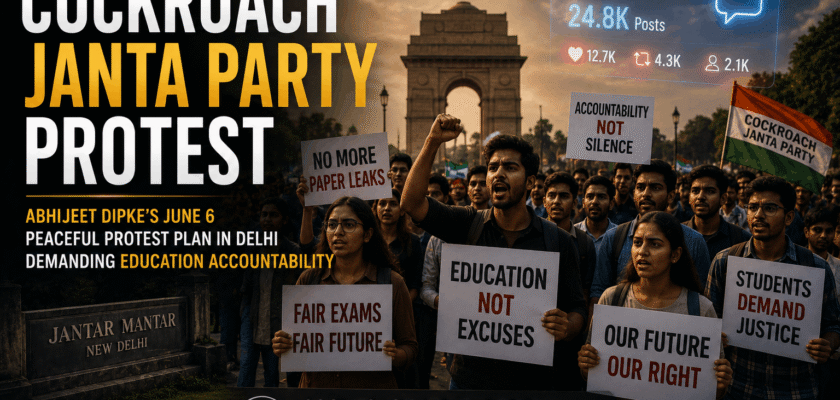
Cockroach Janta Party Protest: Why June 6 Is Getting Attention
Cockroach Janta Party protest is becoming a major political talking point because it may turn viral online anger into a real street movement on June 6, 2026. The group’s founder, Abhijeet Dipke, has announced that he will return to Delhi and launch a peaceful protest demanding Union Education Minister Dharmendra Pradhan’s resignation.
This protest is linked with anger over exam-related lapses, paper leak fears, grading errors, and student anxiety. For many young Indians, the issue is not only one exam. It is about trust in education systems, job pressure, and accountability.
Therefore, the June 6 mandate is being watched as a test of whether online youth frustration can become organised peaceful political action.
Why Cockroach Janta Party Protest Matters in 2026
Cockroach Janta Party protest matters because India’s youth politics is changing. Earlier, student anger often stayed inside campuses, coaching centres, or social media. Now, viral digital movements can gather support quickly and push national political debates.
Reuters described Cockroach Janta Party as a viral youth movement that has gained rapid online traction among young Indians concerned about unemployment, inflation, and recent exam controversies. (reuters.com)
This matters because India has a large young population. If youth-led issues move from Instagram reels to Delhi protest sites, political parties and policymakers cannot ignore them easily.
What Is the Cockroach Janta Party?
Cockroach Janta Party, often called CJP, is a viral satirical youth-led political movement founded by Abhijeet Dipke. It gained attention online after young people began using the “cockroach” label as a symbol of frustration and protest.
The movement appears to mix satire, meme culture, political messaging, and youth anger.
Some reports call it a political movement, while its own public-facing material presents it as a satirical political movement rather than a formally registered political party. Therefore, it is safer to describe CJP as a youth-led satirical political movement unless official Election Commission registration is confirmed.
This distinction matters because online movements can grow fast before formal political structures exist.
Cockroach Janta Party Protest and Abhijeet Dipke’s June 6 Plan
Cockroach Janta Party protest is centred around Abhijeet Dipke’s planned return to India on June 6. Reports say Dipke has called supporters to meet him at the airport and then proceed with a peaceful protest plan in Delhi.
Times of India reported that Dipke plans to seek permission for a Jantar Mantar protest and has called on students and supporters to join him. (timesofindia.indiatimes.com)
This makes June 6 a symbolic date. It may show whether CJP’s online support can convert into physical turnout.
Why the Protest Targets Education Minister Dharmendra Pradhan
The protest demand focuses on Union Education Minister Dharmendra Pradhan’s resignation. CJP supporters are linking this demand to exam-related lapses and controversies that have affected students.
The anger comes from concerns around:
- Paper leak allegations
- Exam delays
- Digital evaluation concerns
- Re-test pressure
- Student anxiety
- Accountability gaps
- Competitive exam uncertainty
- Trust deficit in exam systems
For students, such issues are deeply personal. One exam error can affect admission, career, family pressure, and mental health.
That is why education accountability has become a political issue.
Why Exam Lapses Can Trigger Youth Movements
Exam lapses can trigger youth movements because exams are linked with social mobility in India. Many students spend years preparing for competitive exams. Families invest money in coaching, travel, study material, and hostel life.
When exam systems face errors, students feel cheated.
This anger becomes stronger when students believe that accountability is weak. A paper leak, wrong result, server glitch, or evaluation mistake can break trust quickly.
Therefore, youth movements around education can grow faster than normal political campaigns.
Online Anger to Street Protest: The Big Shift
The biggest question is whether online anger can become street protest. CJP has gained strong online attention, but real-world mobilisation is different.
A street protest needs:
- Physical turnout
- Police permission
- Crowd management
- Clear leadership
- Peaceful discipline
- Legal awareness
- Safety planning
- Media communication
- Student participation
- Sustained message
If the June 6 protest stays peaceful and organised, it may give CJP more political visibility.
If it becomes chaotic, the movement may face criticism.
Why Jantar Mantar Matters
Jantar Mantar has long been a symbolic protest site in Delhi. Many citizen movements, student protests, and civil society campaigns have used it to send a national message.
If CJP gets permission to protest there, the movement can gain legitimacy and media attention.
However, protest permissions depend on police rules, crowd size, security concerns, and public order conditions.
Therefore, the protest plan will depend not only on supporters but also on administrative approval.
The Arrest Concern Around Abhijeet Dipke
Abhijeet Dipke has reportedly said that he may be arrested when he returns to India. Times of India reported his statement that he “will most likely be arrested at the airport,” though the exact legal basis for such concern was not detailed in the brief report. (timesofindia.indiatimes.com)
This arrest concern adds drama to the June 6 plan.
However, readers should be careful. A public claim of possible arrest is not the same as confirmed official action. The situation will become clearer when he arrives in Delhi.
Why Government Response Will Matter
The government response will shape how the protest is viewed. If authorities allow peaceful protest, the movement may remain within democratic channels. If authorities block or restrict it strongly, supporters may frame it as suppression.
Reuters reported that CJP’s X account was blocked, while Dipke also claimed hacking incidents on Instagram. Some officials have accused the group of aligning with “anti-India” elements. (reuters.com)
These claims and counterclaims make the political environment more tense.
A calm and lawful response from all sides will be important.
Cockroach Janta Party Protest and Youth Unemployment
Cockroach Janta Party protest is not only about exam lapses. It also connects with youth unemployment and wider frustration.
Reuters reported that youth unemployment in India was 9.9%, more than triple the national average, and that under-30 Indians make up over half of India’s 1.42 billion population. (reuters.com)
This context matters because exam anger often mixes with job anxiety.
When young people feel that exams are unfair and jobs are uncertain, political frustration grows.
Why Satire Works in Youth Politics
Satire works because it makes serious issues easier to share. A funny name, meme format, or symbolic identity can spread faster than a formal political speech.
Cockroach Janta Party’s branding turns an insult-like word into a protest identity. This type of reclaiming can make supporters feel united.
However, satire also has limits. A movement that wants political impact must move beyond jokes and explain clear demands, legal strategy, and policy goals.
If CJP wants long-term influence, it must convert viral energy into organised civic action.
What Are the Movement’s Main Demands?
Different public reports focus mainly on the demand for Dharmendra Pradhan’s resignation over exam lapses. CJP’s public-facing website also lists broader demands around judicial reform, electoral integrity, women’s representation, media ownership, and anti-defection rules.
However, for the June 6 protest, the education accountability demand appears to be the main mobilising issue.
Supporters are likely to focus on:
- Exam accountability
- Student justice
- Education minister resignation demand
- Transparent investigation
- Stronger exam security
- Better grievance redressal
- Fair treatment for affected students
This keeps the protest message easier to understand.
Why Peaceful Protest Language Is Important
Peaceful protest language is important because it protects democratic legitimacy. When a movement clearly commits to peaceful action, it becomes harder to dismiss it as disorder.
A peaceful protest should follow:
- Legal permission process
- No violence
- No property damage
- Clear slogans
- Crowd discipline
- Medical support
- Women’s safety planning
- Police coordination
- No fake news sharing
- Respect for public order
This helps the movement stay focused on its message.
Risks Facing the June 6 Protest
The June 6 protest may face several risks.
Possible risks include:
- Permission denial
- Low turnout
- Overcrowding at airport
- Police restrictions
- Miscommunication
- Political counter-campaigns
- Fake social media posts
- Security concerns
- Arrest or detention claims
- Movement losing message clarity
Supporters should avoid rumours and follow verified updates.
A peaceful and disciplined approach will matter.
Why Students Should Stay Careful
Students who want to join any protest should stay careful. Political participation is a democratic right, but students must think about safety, law, and personal responsibilities.
Students should:
- Check official protest location
- Avoid violence
- Travel safely
- Inform family
- Keep identity documents
- Avoid fake forwards
- Follow police instructions
- Stay in groups
- Leave if situation becomes unsafe
- Focus on peaceful messaging
Student safety should remain the top priority.
What This Means for Opposition Politics
Opposition parties may watch the movement closely. A youth-led protest over exam lapses can become politically useful for parties opposing the government.
However, if CJP wants to keep independent credibility, it may try to avoid looking like a tool of any party.
This balance is difficult.
If the movement becomes too close to opposition parties, some supporters may question its independence. If it stays separate, it may struggle with resources and organisation.
That is a common challenge for youth movements.
What This Means for the Government
For the government, the protest is a warning signal. Education-related controversies can quickly become national political issues because they affect millions of families.
The government may need to focus on:
- Transparent exam reform
- Stronger paper security
- Clear communication
- Fast grievance systems
- Student mental health support
- Accountability mechanisms
- Digital evaluation checks
- Public trust rebuilding
- Fair retest policies
- Better coordination with states
A strong policy response can reduce anger more effectively than only political counterattack.
Why June 6 Could Become a Symbolic Date
June 6 could become symbolic because it may mark the shift from meme politics to street politics for CJP.
If large numbers gather peacefully, the movement may gain momentum. If turnout stays low, critics may call it an online-only trend.
Either way, the date will test the real strength of the movement.
In politics, viral reach matters. But physical presence still matters more.
Media Coverage Will Shape Public Perception
Media coverage will influence how people understand the protest. Some outlets may frame it as a youth accountability movement. Others may call it a satirical or disruptive campaign.
The framing will matter.
If the protest stays peaceful and focused on student concerns, it may attract wider sympathy. If messaging becomes unclear, the movement may lose public support.
Therefore, CJP’s communication strategy will be important.
Social Media Risks During the Protest
During any protest, social media can spread both useful updates and harmful rumours.
Supporters should avoid:
- Sharing unverified arrest claims
- Posting old videos as new
- Spreading fake police orders
- Sharing edited clips without context
- Doxxing opponents
- Using hate speech
- Creating panic
- Calling for unlawful action
Responsible digital behaviour can protect the movement from misinformation.
What to Watch on June 6
On June 6, key things to watch include:
- Whether Abhijeet Dipke arrives as planned
- Whether police allow airport gathering
- Whether Jantar Mantar permission is granted
- Crowd size
- Student participation
- Government response
- Police restrictions
- Media framing
- Social media trends
- Whether the movement stays peaceful
These signals will show whether the protest becomes a major political moment.
Final Verdict
Cockroach Janta Party protest on June 6 may become an important youth politics moment in India. Abhijeet Dipke’s planned return to Delhi and call for peaceful protest have turned online anger over exam lapses into a possible street mobilisation.
The movement’s strength comes from student frustration, unemployment anxiety, meme culture, and demand for accountability. However, its future will depend on discipline, legal clarity, peaceful conduct, and message focus.
In simple words, June 6 will test whether a viral youth movement can move from hashtags to the streets without losing its purpose.
If the protest remains peaceful and focused, it may force a wider conversation on education accountability in India.


