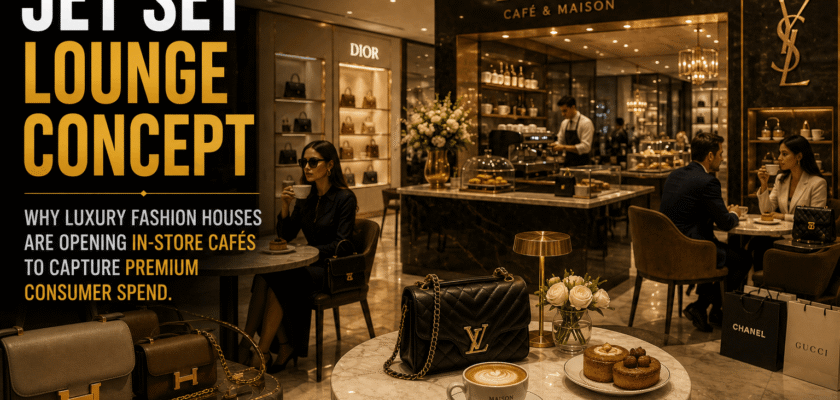
Jet Set Lounge Concept: Why Luxury Retail Is Moving From Shopping to Staying
Jet Set Lounge Concept is becoming a powerful luxury retail trend because fashion houses no longer want customers to only walk in, browse, buy, and leave. They want shoppers to stay longer, feel the brand, take photos, drink coffee, eat dessert, meet friends, and turn the store visit into a lifestyle moment.
Luxury fashion is not only selling bags, shoes, watches, or clothes anymore. It is selling atmosphere. A café inside a luxury boutique can turn a normal visit into a social experience.
Therefore, the Jet Set Lounge Concept is not about coffee alone. It is about premium consumer spend, brand loyalty, status culture, and experiential retail.
Why Jet Set Lounge Concept Matters in 2026
Jet Set Lounge Concept matters because luxury retail is facing a more selective customer. Shoppers are researching more, comparing more, and expecting more value before spending on premium products. Vogue Business recently explained that luxury brands now need emotional connection, cultural relevance, durability, and meaningful experiences to justify higher prices.
At the same time, luxury brands are chasing high-spending consumers in strong markets. Reuters reported that European luxury brands are targeting America’s AI-rich consumers, while North America led global luxury store openings in 2025 with 27% share.
This makes in-store cafés important.
They give wealthy consumers one more reason to visit the store.
What Is the Jet Set Lounge Concept?
Jet Set Lounge Concept means luxury brands create café, restaurant, lounge, or dessert-bar experiences inside or near their stores. These spaces match the brand’s design language, service style, colours, textures, and lifestyle identity.
The idea is simple.
A shopper enters for fashion.
They stay for coffee.
They share the experience online.
They build emotional connection.
They may return later to buy more.
This concept can include:
- Designer cafés
- Brand restaurants
- Champagne lounges
- Dessert counters
- Rooftop cafés
- Private shopping lounges
- Members-only dining rooms
- Fashion-themed afternoon tea
- Seasonal menu pop-ups
- Luxury travel-style interiors
In simple words, the store becomes a lifestyle destination.
Luxury Fashion Cafés Are Not Selling Only Food
Luxury fashion cafés are not selling only food. They are selling access to a brand world. A customer may not buy a ₹3 lakh handbag that day, but they may buy a branded coffee, pastry, dessert, or lunch experience.
That small purchase creates emotional entry into the brand.
A branded café can offer:
- Affordable luxury entry point
- Social media visibility
- Longer store visits
- Premium hospitality
- Brand storytelling
- Product discovery
- Client relationship building
- Lifestyle association
- High-margin food and beverage
- Better footfall
This is why cafés are strategic.
The latte is not the product. The brand feeling is the product.
Why Fashion Houses Are Opening In-Store Cafés
Fashion houses are opening in-store cafés because shoppers want experiences, not only products. Business Traveller reported in April 2026 that luxury fashion is using elaborate food and beverage concepts, from Prada pastries to Louis Vuitton lobster rolls, to lure shoppers back into stores.
This trend is growing because physical retail must compete with online shopping.
A website can show products.
A store can create emotion.
A café can extend that emotion.
When customers sit inside a branded space, they spend more time with the brand’s universe.
That time can turn into loyalty.
Louis Vuitton and the Luxury Hospitality Push
Louis Vuitton has become one of the most visible examples of fashion hospitality. Food & Wine reported that luxury fashion brands including Ralph Lauren, Armani, Louis Vuitton, and Tiffany’s keep opening restaurants and cafés around the world, with New York openings creating major buzz.
Forbes also described Louis Vuitton’s New York café as an example of how a brand can turn a store into a “day plan,” not just a shopping stop.
This matters because luxury shopping is becoming more destination-based.
A customer may visit a boutique not only to buy. They may visit to eat, take photos, explore interiors, and feel part of a premium world.
Dior, Prada, Tiffany, Ralph Lauren and the Café Strategy
The designer café trend is not limited to one brand. Rockbird Media’s 2026 retail café trend report notes that Dior operates cafés in Seoul, Paris, and Miami, while Hermès, Louis Vuitton, Tiffany & Co., and Ralph Lauren have also followed the café or hospitality route.
These brands understand something simple.
Food is emotional.
Fashion is emotional.
Together, they create memory.
Examples include:
- Dior café concepts
- Prada Caffè
- Ralph’s Coffee
- Tiffany Blue Box Café
- Armani Ristorante
- Louis Vuitton café experiences
- Gucci Osteria-style hospitality
- Coach café-style brand moments
Each space extends the brand beyond the rack.
Why Premium Consumers Want Lounge Experiences
Premium consumers want lounge experiences because luxury is becoming more social and experiential. A high-income customer may already have products. Now, they want access, privacy, taste, design, and cultural status.
A fashion café offers:
- A quiet luxury atmosphere
- Social proof
- Better service
- Instagram-worthy interiors
- Exclusive menu items
- Private client moments
- Longer shopping comfort
- Better gifting experience
- Lifestyle identity
- A feeling of belonging
This is why premium customers respond to lounges.
They are not only paying for food. They are paying for the feeling of being inside a luxury world.
Dwell Time: The Hidden Retail Metric
Dwell time means how long a customer stays inside a store. In luxury retail, dwell time matters because high-value purchases often need time, trust, and emotional readiness.
An in-store café can increase dwell time naturally.
A customer may:
- Browse a new collection
- Sit for coffee
- Talk with a sales associate
- See products again
- Try accessories
- Take photos
- Invite a friend
- Ask about a limited item
- Book a private appointment
- Return for a purchase later
Food makes the store visit slower, warmer, and more memorable.
That can support premium spend.
Why In-Store Cafés Help Premium Consumer Spend
In-store cafés help premium consumer spend because they create low-pressure engagement. A shopper may feel uncomfortable entering a luxury store only to browse. But a café gives them a reason to enter.
Once inside, the customer interacts with the brand.
This can lead to:
- Higher footfall
- Better brand recall
- More product discovery
- Stronger client data
- Better social sharing
- More repeat visits
- More gifting opportunities
- More appointment bookings
- Stronger loyalty
- More impulse purchases
The café works as a soft entry point.
It lowers the psychological barrier to luxury.
The Café as an Affordable Luxury Doorway
A luxury handbag may be out of reach for many people. But a branded coffee, pastry, or dessert may be accessible.
This creates an affordable luxury doorway.
A student, tourist, creator, young professional, or fashion fan may not buy luxury products yet. But they can visit a designer café, share the experience, and build aspiration.
This is powerful for brands because aspiration today can become loyalty tomorrow.
A ₹700 coffee may not equal a ₹3 lakh bag.
But it can start a relationship with the brand.
That is why designer cafés are strategic.
Social Media Value of Designer Cafés
Designer cafés are highly social-media friendly. Beautiful interiors, branded cups, signature desserts, premium plates, and fashionable crowds create shareable content.
Customers post:
- Coffee photos
- Table settings
- Store interiors
- Branded menus
- Mirror shots
- Outfit photos
- Dessert close-ups
- Shopping bags
- Location tags
- Reels and vlogs
This gives brands free organic visibility.
In luxury, social media is not only marketing. It is social proof.
When people see others enjoying the café, the brand feels more culturally relevant.
Why Gen Z Likes Fashion Cafés
Gen Z likes fashion cafés because they combine identity, aesthetics, community, and content. Many younger consumers do not only want products. They want places that match their personal style.
A fashion café gives Gen Z:
- Aesthetic interiors
- Affordable entry to luxury
- Content creation opportunities
- Social hangout value
- Brand connection
- Cultural participation
- Trend discovery
- Outfit moment
- Premium but accessible experience
- Lifestyle storytelling
This is why cafés can bring younger consumers into luxury ecosystems before they become full luxury buyers.
Luxury Experiential Retail: The Bigger Trend
Luxury experiential retail means stores become more than sales floors. They become places for culture, hospitality, art, food, events, and community.
Vogue Business reported in its 2026 retail guidance that luxury shoppers still value trusted inspiration and meaningful offline experiences, even as social media and AI shape discovery.
This supports the café trend.
Luxury brands need offline experiences that cannot be copied by e-commerce.
A café creates that physical difference.
Why Offline Luxury Still Matters
Offline luxury still matters because high-value purchases often require touch, fit, service, and emotion. A customer buying a luxury bag, watch, or dress may want to feel materials, compare colours, and speak with a trained advisor.
A café makes the offline visit better.
It adds:
- Comfort
- Time
- Hospitality
- Memory
- Conversation
- Personal service
- Private attention
- Lifestyle immersion
- Social value
- Repeat reason
Online shopping is efficient.
Luxury retail wants to be memorable.
That is the difference.
The Jet Set Lounge Concept and Travel Culture
Jet Set Lounge Concept also connects with travel culture. Luxury cafés often feel like airport lounges, hotel lobbies, private clubs, or global city destinations.
This is important because luxury customers travel.
They may visit:
- Paris
- Milan
- London
- Dubai
- New York
- Seoul
- Tokyo
- Singapore
- Miami
- Mumbai
A branded café gives them a familiar luxury environment across cities.
It turns the brand into a travel ritual.
How Luxury Cafés Support Clienteling
Clienteling means building personal relationships with high-value customers. Luxury brands use clienteling to invite customers to private viewings, launches, trunk shows, or exclusive services.
A café helps clienteling because it gives staff a softer way to host customers.
Instead of saying, “Come buy something,” the brand can say:
“Join us for coffee and preview the new collection.”
This feels more personal.
It can support:
- VIP appointments
- Private launches
- Birthday invitations
- Styling sessions
- Gift consultations
- Relationship building
- High-value sales
- Loyalty programs
- Repeat visits
- Brand community
Hospitality makes selling feel less direct.
Why Luxury Cafés Help Slow Retail
Slow retail means customers spend more time in a store, explore slowly, and connect emotionally before buying. This is different from fast retail, where shoppers quickly pick products and leave.
Luxury needs slow retail.
A luxury café supports slow retail by creating:
- Rest points
- Conversation space
- A relaxed mood
- Premium service
- Product discovery time
- Social interaction
- Visual storytelling
- Emotional connection
- Less purchase pressure
- Stronger memory
A relaxed customer may be more open to premium buying.
The Store Becomes a Brand Embassy
A luxury store with a café becomes a brand embassy. It represents the brand’s world, taste, culture, hospitality, and social identity.
Kering’s 2026 strategy for Gucci includes reducing store count and focusing on upgraded flagship concepts that feel like “Italian embassies.”
This is the bigger direction in luxury.
Fewer but better stores.
Less random retail.
More immersive flagship experiences.
Cafés fit this strategy because they make the store feel like a place, not just a shop.
Why Food Works So Well With Fashion
Food works well with fashion because both are sensory. Fashion uses fabric, colour, shape, texture, identity, and season. Food uses taste, smell, presentation, texture, and ritual.
Together, they create a full sensory experience.
Fashion plus food can offer:
- Seasonal menus
- Branded desserts
- Signature colours
- Local ingredients
- Cultural storytelling
- Designer tableware
- Premium packaging
- Private dining
- Event launches
- Social moments
This is why the combination feels natural.
A branded dessert can be as recognisable as a handbag colour.
Menu Design as Brand Storytelling
Menu design matters because the café must feel like the fashion house. A random menu will not work. The food, drinks, plating, colours, and names must match the brand identity.
A strong luxury café menu may include:
- Signature coffee
- Branded pastries
- Seasonal desserts
- Local city specials
- Premium tea service
- Champagne pairings
- Designer tableware
- Minimal plating
- Luxury packaging
- Limited-edition menu items
The menu becomes part of the brand story.
It should feel curated, not generic.
Why In-Store Cafés Are High-Margin Brand Theaters
In-store cafés can become high-margin brand theaters. Food Institute reported in February 2026 that fashion houses are turning cafés into high-margin brand theaters, using lattes and pastries to boost dwell time and drive category lifts.
This phrase is important.
A luxury café is theater because every detail is staged:
- Cup design
- Lighting
- Furniture
- Staff uniform
- Plate style
- Menu language
- Music
- Seating
- Scent
- Service ritual
Customers are not only eating. They are performing luxury participation.
How Cafés Support Product Sales
Cafés can support product sales indirectly. A customer may enter for coffee and later notice a bag, scarf, perfume, or accessory.
Cafés can increase product sales through:
- Store footfall
- Product exposure
- Better mood
- Longer stay
- Stronger brand memory
- Sales associate interaction
- Gift discovery
- Seasonal display proximity
- Event invitations
- Social sharing
The café does not need to sell fashion directly.
It only needs to create better conditions for fashion sales.
Why Cafés Help Beauty and Fragrance Sales
Luxury cafés can especially help beauty and fragrance categories. These categories often have lower entry price points than couture or handbags.
A customer visiting a branded café may also buy:
- Perfume
- Lipstick
- Candle
- Mini fragrance
- Beauty gift set
- Small leather accessory
- Silk scarf
- Branded notebook
- Keychain
- Seasonal gift item
This makes the café useful for converting aspirational visitors into first-time buyers.
Small luxury purchases can lead to larger future purchases.
The Role of Limited Editions
Limited editions are powerful in luxury cafés. A special dessert, branded cup, seasonal box, or fashion-week menu can create urgency.
Limited items can drive:
- Social media buzz
- Repeat visits
- Collectors’ interest
- Gift purchases
- Event traffic
- Press coverage
- Influencer content
- Brand excitement
- Local relevance
- Premium pricing
Luxury customers like scarcity.
A café can create scarcity without launching a full fashion collection.
Local Culture Makes Cafés Stronger
Luxury cafés work better when they connect with local culture. A café in Paris should not feel exactly like one in Seoul, Miami, or Mumbai. The best concepts mix brand identity with local flavour.
Localisation can include:
- Regional ingredients
- City-specific desserts
- Local artists
- Local design references
- Local festival menus
- Local service style
- Local language touches
- Local collaborations
- Regional tableware
- City-exclusive items
This makes the café feel special, not copy-pasted.
Why Malls and Flagships Want Fashion Cafés
Malls and flagship locations want fashion cafés because they increase footfall and make the location more attractive. A luxury café can become a destination inside a shopping district.
It can help property owners by increasing:
- Visitor dwell time
- Premium foot traffic
- Food and beverage appeal
- Social media visibility
- Luxury positioning
- Event potential
- Weekend visits
- Cross-store movement
- High-value customer presence
- Destination value
This is why landlords may support such concepts.
Luxury cafés make retail spaces feel alive.
Risks of the Jet Set Lounge Concept
Jet Set Lounge Concept has risks. Running a café or restaurant is different from selling fashion. Food operations need hygiene, kitchen management, staff training, supply chain, permits, and consistent service.
Risks include:
- Food quality issues
- Slow service
- High operating cost
- Brand dilution
- Poor reviews
- Hygiene problems
- Menu mismatch
- Low table turnover
- Staff training gaps
- Weak profitability
Vogue Business noted earlier that luxury restaurants can be hard to operate and may take time to break even.
So, brands must execute carefully.
Why Service Quality Must Match the Brand
Service quality must match the brand. A luxury café cannot offer average service while charging premium prices. Customers will judge the whole brand by the experience.
Service should be:
- Warm
- Polished
- Fast enough
- Personal
- Knowledgeable
- Calm
- Well-trained
- Discreet
- Consistent
- Premium
A bad café experience can harm the fashion brand.
Hospitality must feel as refined as the product.
Why Pricing Needs Balance
Pricing needs balance. Luxury cafés can charge premium prices, but customers still expect value. If the café feels overpriced without quality, it may attract backlash.
Good pricing should reflect:
- Ingredient quality
- Brand value
- Location
- Service
- Presentation
- Atmosphere
- Exclusivity
- Portion size
- Experience
- Social value
A designer café does not need to be cheap.
But it must feel worth it.
Why Not Every Brand Should Open a Café
Not every fashion brand should open a café. The concept works best when the brand has strong lifestyle identity, flagship locations, design credibility, and enough footfall.
A brand should ask:
- Does food fit our identity?
- Do we have the right location?
- Can we maintain service quality?
- Will customers stay longer?
- Can we manage operations?
- Does the menu tell our story?
- Will it increase brand value?
- Can it support sales?
- Can it attract social media?
- Can it survive after the launch buzz?
If the answer is weak, the café may become a gimmick.
What Luxury Brands Should Build Next
Luxury brands that open cafés should design them as part of a full experience.
They should build:
- Strong interior concept
- Signature menu
- Brand-matched tableware
- Private client areas
- Seasonal activations
- Event programming
- Appointment links
- Product discovery zones
- Social media moments
- High service standards
The café should not feel attached randomly.
It should feel like the brand’s lifestyle in edible form.
What Consumers Should Expect
Consumers visiting luxury fashion cafés should expect premium atmosphere, design, service, and presentation. But they should also understand that they are paying for more than food.
They are paying for:
- Brand access
- Interior design
- Social status
- Service
- Location
- Photography value
- Luxury storytelling
- Experience
- Exclusivity
- Memory
That does not mean every luxury café is worth it.
Consumers should judge quality, not only brand name.
The Future of Fashion Hospitality
The future of fashion hospitality looks strong because luxury brands need more than products to stay culturally relevant. Cafés, restaurants, lounges, beach clubs, hotels, residences, and private clubs may become part of brand ecosystems.
Future fashion hospitality may include:
- Designer cafés
- Members-only lounges
- Fashion hotel suites
- Private dining rooms
- Airport-style luxury lounges
- Resort pop-ups
- Beach clubs
- Art café hybrids
- Fashion-week restaurants
- Brand-owned cultural clubs
Luxury will become more immersive.
Customers will not only wear the brand. They will eat, sit, travel, and socialize inside the brand.
Final Verdict
Jet Set Lounge Concept is reshaping luxury experiential retail because fashion houses are using in-store cafés to increase dwell time, emotional connection, social sharing, and premium consumer spend. These cafés are not only food businesses. They are brand theaters.
From Louis Vuitton and Dior to Prada, Tiffany, Ralph Lauren, and Armani, luxury brands are turning hospitality into a new front door for shoppers. A coffee or dessert may be the first step into a brand universe, while the store experience builds loyalty and future purchase intent.
In simple words, luxury retail is moving from “buy the product” to “live the brand.”
The brands that win will be the ones that create cafés with real taste, strong design, excellent service, and clear brand storytelling — not just expensive coffee with a logo.


