
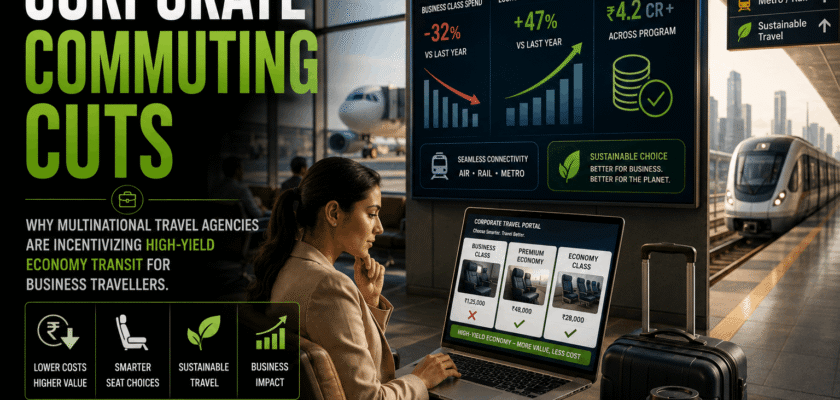
Corporate Commuting Cuts: Why Business Travel Is Becoming More Selective
Corporate commuting cuts are becoming a major 2026 travel trend because companies are no longer approving every business trip automatically. Travel is still important, but the logic has changed. Multinational companies now want each trip to prove business value, support revenue, protect employee wellbeing, and fit cost-control rules.
This does not mean corporate travel is dead. It means corporate travel is becoming sharper. Instead of sending employees on every possible meeting, companies are asking whether the trip should happen, who should travel, which cabin should be booked, and whether the same goal can be achieved with fewer nights away.
Why Corporate Commuting Cuts Matter in 2026
Corporate commuting cuts matter because business travel budgets are growing, but not blindly. Morgan Stanley expects corporate travel budgets to rise by about 5% globally in 2026, yet travel managers still cite cost savings and macro uncertainty as key concerns. This creates a balanced picture: companies are travelling, but they are travelling with more control.
FCM also notes that global business travel spend is expected to reach about US$1.69 trillion in 2026, while trends such as automation, sustainability mandates, traveller wellbeing, and duty of care are shaping travel programs. In simple words, the travel budget is not disappearing. It is being redesigned.
What Is High-Yield Economy Transit?
High-yield economy transit means economy or premium-economy travel that still delivers high business value. It is not the cheapest possible ticket. It is the smartest fare choice for a trip that must happen.
This can include standard economy, extra-legroom economy, premium economy, flexible economy fares, corporate-negotiated economy rates, rail alternatives, or shuttle-based airport transfers. The idea is to reduce unnecessary luxury while keeping the journey safe, reliable, and productive.
Why Multinational Travel Agencies Are Incentivizing Economy Options
Multinational travel agencies and travel management companies are incentivizing economy and premium-economy options because clients want cost control without stopping business mobility. A company may still need sales visits, client meetings, site inspections, conferences, and leadership travel. But it may not want every trip to use business class.
Travel management platforms can guide employees through approved fare choices, preferred airlines, policy alerts, carbon visibility, early booking prompts, and automated approval workflows. This turns cost control into the booking experience itself.
Business Class Is Becoming More Selective
Business class is not disappearing, but it is becoming more selective. Many companies reserve business class for very long flights, senior executives, medical needs, red-eye recovery requirements, or high-value client-facing travel.
For many medium-haul or internal meetings, premium economy or flexible economy can provide enough comfort at a lower cost. Advito’s 2026 corporate travel outlook notes that premium economy is rising for both leisure and business travel, while business class demand is softening because companies are thinking about cost and carbon together.
Premium Economy as the New Middle Ground
Premium economy is becoming the middle ground between cost control and traveller comfort. It gives extra space, better seat pitch, improved meals on some airlines, priority boarding in some cases, and better long-haul comfort than basic economy.
For companies, premium economy can be a practical compromise. It reduces the gap between employee wellbeing and finance discipline. It also gives travel managers a policy lever: business class only where justified, premium economy for approved long-haul or high-fatigue routes, and standard economy for shorter trips.
Why Cost Control Is Not the Only Reason
Corporate commuting cuts are not only about saving money. Companies are also focusing on carbon reduction, employee time, meeting quality, compliance, and duty of care. A lower-cost trip that exhausts the employee may not be successful. A cheaper route with risky connections may also fail the business purpose.
The best travel programs now ask: Is the trip necessary? Is the fare class appropriate? Is the route safe? Is the employee protected? Is the carbon impact justified? Is the business outcome measurable?
Sustainability Is Changing Fare-Class Decisions
Sustainability is a major reason companies are reviewing cabin class. Business-class seats take more space in aircraft cabins, and many corporate travel teams now include carbon visibility in approval workflows.
This does not mean every company bans premium cabins. It means the environmental impact must be justified. A regional internal meeting may not deserve a high-emission travel setup. A major client renewal or investor roadshow may still justify a higher-comfort option.
The Role of Travel Management Companies
Travel management companies are becoming policy engines, not only booking agents. Their role is to help companies control spend before the booking happens, not after the invoice arrives.
A modern travel management company can support approved fare rules, trip-purpose tagging, preferred airline contracts, carbon reporting, hotel caps, traveller tracking, expense automation, crisis alerts, and approval workflows. That is why corporate travel is shifting from manual booking to managed mobility.
How Incentives Work Inside Corporate Travel Platforms
Incentives do not always mean cash rewards. In corporate travel, incentives can be built into the booking system.
For example, a platform can show a green badge for lower-carbon routes, highlight policy-compliant premium economy, recommend earlier flights to avoid last-minute fares, reward teams for booking in advance, or route approvals faster when employees choose preferred economy options.
This makes the right choice easier than the expensive choice.
Trip Purpose Is Becoming a Required Field
Many companies are moving toward trip-purpose approval. Instead of booking first and explaining later, employees may need to justify the purpose upfront.
Trip categories can include client revenue, project delivery, safety inspection, leadership review, conference, training, internal meeting, or team bonding. High-value categories can receive more travel flexibility. Low-value categories may be moved to virtual meetings, rail, regional hubs, or economy-only rules.
Why High-Yield Economy Is Useful for Sales Teams
Sales teams still need travel because relationships matter. But not every sales trip needs business class. A high-yield economy strategy allows sales teams to travel more often while keeping budget under control.
For example, a company may allow premium economy for long-haul client meetings but require economy for short domestic visits. It may also allow extra-legroom economy when the employee must present immediately after landing. This approach protects productivity without overspending.
Why Finance Teams Like This Model
Finance teams like high-yield economy transit because it creates visible cost control. Travel is one of the easiest categories to overspend when approvals are weak.
A controlled economy-first model helps finance teams forecast costs, reduce leakage, negotiate better airline contracts, compare departments, monitor exceptions, and report savings. The goal is not to block travel. The goal is to make every trip financially defensible.
Why HR and People Teams Should Care
HR teams should care because travel policy affects employee wellbeing. A brutal travel policy can save money in the short term but create burnout, resentment, and low productivity.
A smart policy balances savings with comfort. It may include rest-time rules, overnight-flight exceptions, premium economy eligibility, health-based accommodations, safer transfer options, and clear duty-of-care support. Corporate commuting cuts should reduce unnecessary travel, not punish employees who must travel.
Duty of Care Is Still Non-Negotiable
Duty of care means the company must protect employees while they travel. Cost savings should never override safety.
Travel programs must consider safe airlines, reliable connections, hotel location, emergency support, political risk, health advisories, weather disruptions, and traveller tracking. A cheap itinerary with unsafe routing is not a smart saving. It is a risk.
Why Rail and Regional Transit Are Getting Attention
On some routes, rail can replace short flights. This is especially true in Europe, Japan, parts of China, and selected metro corridors where high-speed or reliable rail exists.
Rail may reduce airport wait time, emissions, and city-centre transfer hassle. For companies, rail can be a high-yield economy transit option because the employee can work during the journey and avoid airport delays.
Hotel and Ground Transport Are Part of the Same Strategy
Corporate commuting cuts are not only about airfare. Hotel nights, taxis, airport transfers, parking, meals, and local transport can increase total trip cost.
Travel managers now look at total trip cost. A cheaper flight that requires an extra hotel night may not be cheaper. A hotel far from the meeting location may increase taxi cost and employee fatigue. The smartest travel policy measures the whole journey.
How AI Is Changing Corporate Travel Decisions
AI is helping travel platforms suggest policy-compliant options faster. AI tools can compare fares, detect out-of-policy bookings, recommend cheaper routes, summarize travel spend, flag risky connections, and automate expense reports.
The best use of AI in travel is not to force the cheapest option. It is to recommend the option that fits cost, comfort, safety, carbon, and business value.
The Approval Workflow Is Becoming Smarter
Old travel approval was often slow and manual. New workflows can approve low-risk policy-compliant trips quickly while escalating expensive or risky trips for review.
A smart approval workflow can ask: Is this trip customer-facing? Is it urgent? Is the fare within policy? Is there a lower-carbon option? Is premium economy justified? Is the route safe? Is the hotel cap respected? This improves control without slowing every traveller.
What Employees Should Do Before Booking
Employees should treat business travel as a business case. Before booking, they should check the purpose, meeting importance, route options, fare class, travel time, health impact, and company policy.
A good employee booking note may say: “Client renewal meeting, expected revenue impact, overnight flight, premium economy requested due to presentation on arrival.” This is stronger than simply choosing a higher fare and hoping approval passes.
What Companies Should Put in Travel Policy
A modern travel policy should be simple and clear. Employees should not need to decode 30 pages before booking.
The policy should define economy rules, premium economy rules, business class eligibility, rail-first routes, hotel caps, booking windows, exception approvals, health accommodations, sustainability preferences, emergency support, and expense documentation. Clear rules reduce conflict.
Suggested Fare-Class Framework
A practical fare-class framework could look like this:
– Flights under 4 hours: economy by default.
– Flights 4 to 7 hours: economy or extra-legroom economy, depending on work need.
– Flights 7 to 10 hours: premium economy may be allowed with manager approval.
– Overnight flights with same-day meetings: premium economy or business class can be considered.
– Flights over 10 hours: premium economy by default, business class for specific roles or business-critical trips.
This is only a model. Each company should adjust based on budget, region, employee needs, and duty-of-care standards.
Why Clear Exceptions Matter
Exceptions should be transparent. Employees may need a higher cabin for medical reasons, disability, pregnancy, urgent business need, security risk, or back-to-back travel.
If exceptions are unclear, employees feel the policy is unfair. If exceptions are too easy, the policy becomes useless. A strong system records the reason and applies it consistently.
Corporate Travel Agencies and Supplier Negotiations
Multinational travel agencies can negotiate better rates when companies consolidate bookings through approved channels. This gives travel managers data and bargaining power.
Supplier negotiations may include corporate fares, flexible tickets, premium economy discounts, hotel rate caps, airport lounge access, transfer rates, rail discounts, and cancellation rules. The goal is to give employees better choices inside controlled budgets.
Why Leakage Hurts Savings
Leakage happens when employees book outside approved tools. This may happen because outside sites look cheaper, employees want loyalty points, or the internal system is confusing.
Leakage hurts companies because they lose visibility, duty-of-care tracking, negotiated discounts, expense control, and policy compliance. A good travel program must make approved booking easy enough that employees do not avoid it.
How to Measure Success
Corporate commuting cuts should be measured carefully. It is not enough to say travel spend went down. The company must check whether business outcomes stayed strong.
Useful metrics include average trip cost, fare-class mix, booking lead time, policy compliance, carbon per trip, traveller satisfaction, sales outcome, client meeting conversion, hotel cost, exception rate, and avoided travel savings.
Risks of Over-Cutting Travel
Over-cutting travel can hurt business. Some relationships need face-to-face trust. Some projects need site visits. Some teams need in-person alignment. Some customer problems cannot be solved fully online.
If companies cut too much, they may lose deals, weaken culture, delay projects, and reduce employee engagement. The goal should be smarter travel, not zero travel.
Risks of Under-Cutting Travel
Under-cutting travel is also risky. If every department continues old travel habits, costs rise quickly. Expensive last-minute fares, unnecessary business-class trips, duplicate meetings, weak hotel controls, and poor approval workflows can drain budgets.
A good company finds the middle path: fewer low-value trips, better approved travel, and smarter fare class rules.
How Business Travellers Can Stay Productive in Economy
Business travellers choosing economy or premium economy can still stay productive with the right habits.
They should choose direct routes where possible, book aisle or extra-legroom seats when allowed, carry noise-cancelling headphones, use offline documents, protect sleep, avoid overpacking, arrive with time buffer, and schedule recovery before important meetings.
Why Traveller Wellbeing Is a KPI
Traveller wellbeing is becoming a KPI because tired employees do not perform well. A cheaper trip that reduces meeting performance can be a false saving.
Travel teams should measure fatigue, delayed flights, recovery time, travel frequency, red-eye usage, and employee feedback. If a role requires frequent travel, comfort rules should be more thoughtful. Frequent travellers need protection from burnout.
India Angle: Why This Matters for Multinational Teams
For India-based multinational teams, corporate commuting cuts matter because many employees travel between Bengaluru, Mumbai, Delhi NCR, Hyderabad, Pune, Singapore, Dubai, London, Frankfurt, and U.S. hubs.
Business-class fares can become expensive on long-haul routes. Premium economy, early booking, hub optimization, and safer route planning can reduce costs while keeping employees mobile. Indian companies with global clients should treat travel policy as a strategic finance tool.
Travel Agency Checklist for Companies
Companies choosing a travel management partner should ask practical questions.
Does the platform support policy automation? Can it show carbon data? Does it manage premium economy rules? Can it track travellers during disruption? Does it integrate expenses? Can it prevent out-of-policy bookings? Does it support multi-country teams? Can it report savings by department? Does it provide 24/7 support?
7-Day Travel Policy Reset Plan
Day 1: Review last 12 months of travel spend.
Day 2: Identify top routes and departments.
Day 3: Create fare-class rules.
Day 4: Add premium economy eligibility.
Day 5: Define approval exceptions.
Day 6: Add carbon and duty-of-care checks.
Day 7: Train employees and publish a simple booking guide.
Final Verdict
Corporate commuting cuts are not the end of business travel. They are the next stage of mature business travel. Companies are still travelling in 2026, but they are applying more discipline to who travels, why they travel, and which fare class makes sense.
High-yield economy transit is the practical middle path. It lets companies protect budgets, reduce unnecessary business-class spending, support sustainability goals, and still keep important business trips moving.
In simple words, the best corporate travel program is not the cheapest program. It is the one that sends the right people, on the right trips, in the right cabin, with the right business purpose.


