
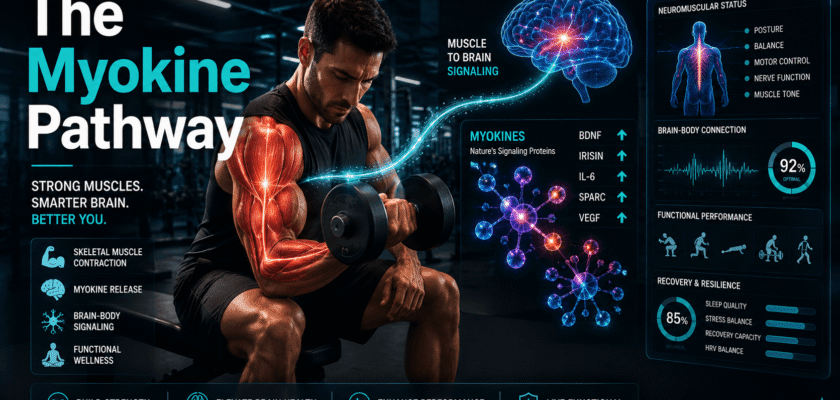
Myokine Pathway: Why Muscle Contraction Is Getting Attention
The myokine pathway is becoming a major topic in health and fitness because muscle is not only a movement tissue. During exercise, working muscle releases signaling molecules called myokines. These signals may talk to the brain, liver, fat tissue, bone, blood vessels and immune system.
For years, many people treated low-impact aerobics as the safest default exercise. Walking, cycling and light cardio still matter. However, functional neurologists and exercise scientists are now paying closer attention to stronger skeletal muscle contraction.
The reason is simple. A stronger contraction can create a stronger body signal. As a result, resistance training, loaded carries, intervals and controlled power work may support brain-body communication in ways that easy movement alone may not fully match.
Still, this does not mean everyone should quit low-impact aerobics. Instead, the smarter message is balance. Aerobic work supports the heart, while muscle contraction may add important metabolic and brain-related signals.
| KEY TAKEAWAYThe myokine pathway helps explain why strength-focused movement can support more than muscle size. It may also affect metabolism, mood, inflammation, aging and brain health. |
Myokine Pathway Signals and Brain-Body Crosstalk
Myokines are small proteins, peptides and other signaling molecules released by muscle. Research reviews describe skeletal muscle as an endocrine organ because it can send messages to other tissues.
Several reviews link exercise-induced myokines with muscle-brain crosstalk. Some commonly discussed signals include IL-6, irisin, BDNF, IGF-1 and cathepsin B. These names sound technical, but the core idea is easy to understand.
When muscle works, it sends a chemical update to the body. The brain may respond with better plasticity, mood support and stress regulation. Meanwhile, other organs may respond with improved glucose handling and inflammation control.
Why Low-Impact Aerobics Alone May Not Be Enough
Low-impact aerobics can improve heart health, stamina and daily energy. Therefore, it still deserves a place in a weekly routine.
However, very easy exercise may not create enough muscular tension for some adaptations. If the muscle never has to produce meaningful force, the body receives a weaker strength signal.
This is why functional training often includes resistance. The goal is not extreme bodybuilding. Instead, the goal is safe contraction that challenges the nervous system, joints and muscles together.
What Functional Neurologists See in Muscle Contraction
Functional neurologists often look at movement as input for the nervous system. A squat, row, carry or step-up is not just a muscle task. It also trains balance, joint position, coordination and sensory feedback.
Because skeletal muscle contraction sends signals through nerves and blood, it may support brain-body communication. Moreover, a well-designed movement plan can train strength and control at the same time.
That is why many clinicians and coaches now prefer smart strength work over only gentle cardio for people who need better stability, posture, energy and metabolic support.
Practical Exercises That May Support the Myokine Pathway
✓ Bodyweight squats or chair squats for lower-body contraction.
✓ Resistance-band rows for upper-back and posture muscles.
✓ Loaded carries with light dumbbells or water bottles.
✓ Step-ups on a stable low platform.
✓ Wall push-ups or incline push-ups.
✓ Glute bridges for hip strength.
✓ Short uphill walks or controlled intervals.
✓ Slow resistance reps with full breathing control.
| SAFE START BOXStart with two strength sessions per week. Keep the first sets easy. Then increase effort slowly. Good form matters more than heavy weight. |
How to Combine Strength and Aerobics
A balanced weekly plan can be simple. Most people do not need a complicated routine to support the myokine pathway.
First, use low-impact cardio for heart health and recovery. Next, add two or three short strength sessions. Finally, include mobility work so the body can move well.
Because recovery also affects hormones and myokines, sleep and nutrition matter. A hard workout with poor sleep may not give the same benefit as a steady plan that the body can repeat.
Simple Weekly Template
✓ Monday: 25 minutes low-impact cardio plus 10 minutes mobility.
✓ Tuesday: 30 minutes full-body strength training.
✓ Wednesday: easy walk or cycling.
✓ Thursday: strength training with squats, rows and carries.
✓ Friday: rest, stretching or light yoga.
✓ Saturday: short interval walk or hill walk if medically safe.
✓ Sunday: recovery walk and meal prep.
Who Should Be Careful
⚠ People with chest pain, uncontrolled blood pressure or heart disease.
⚠ People with recent injury, surgery or severe joint pain.
⚠ People with dizziness, fainting or unexplained neurological symptoms.
⚠ Pregnant people who do not already have clinician clearance.
⚠ Older adults who are new to resistance training.
⚠ Anyone with diabetes medication changes or frequent low blood sugar.
Nutrition That Supports Muscle Signals
Exercise creates the signal, but nutrition helps the body respond. Protein is important because muscles need amino acids for repair.
In addition, fiber-rich carbohydrates support training energy and gut health. Healthy fats can support hormones. Water and electrolytes also matter when sweat is high.
However, supplements are not the main point. Most people should first improve regular meals, sleep and training consistency.
Organic Search Summary for Readers
The myokine pathway gives a clear reason to train muscle, not only burn calories. When skeletal muscle contracts, it may send helpful signals across the body.
Because of this, low-impact aerobics should not be the only plan for many adults. A mix of walking, strength training, mobility and recovery is more complete.
Most importantly, the best plan is the one a person can do safely and repeat. Consistent muscle contraction is more useful than a hard routine that stops after one week.
Conclusion
The myokine pathway is changing how many experts explain exercise benefits. Muscle is not just a machine for movement. It is also a signaling organ.
Functional neurologists are paying attention because stronger skeletal muscle contraction may support brain-body communication, metabolic health and resilience.
Low-impact aerobics still matters. However, for many people, the missing piece is safe strength work. When both are combined, the body receives a stronger and more complete health signal.
Frequently Asked Questions
Q. What is the myokine pathway?
The myokine pathway is the process through which working muscles release signals that may affect the brain, metabolism, immune system and other organs.
Q. Does walking activate myokines?
Yes, walking can help. However, stronger muscle contraction may create a different or stronger training signal.
Q. Is strength training better than cardio?
Not exactly. Strength and cardio support different systems. A balanced routine usually works better than choosing only one.
Q. Can beginners train the myokine pathway?
Yes. Beginners can start with chair squats, band rows, wall push-ups and short walks.
Q. Do I need heavy weights?
No. Good form, steady effort and progressive overload matter more than lifting very heavy weights.


