
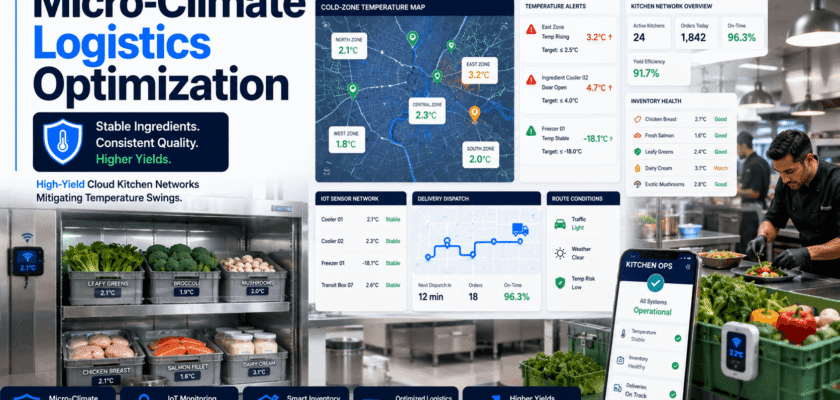
Micro-Climate Logistics Optimization: Why Cloud Kitchens Need It
Micro-climate logistics optimization is becoming important for cloud kitchen networks because ingredients do not fail only inside the kitchen. They can lose quality during receiving, storage, prep, batching, delivery staging and return handling.
In high-yield cloud kitchens, the same outlet may run several brands from one compact space. That creates faster ingredient movement, tighter refrigeration space and more chances for temperature swings.
The India cloud kitchen market is also expanding. IMARC estimates the India cloud kitchen market reached USD 1.24 billion in 2025 and projects growth to USD 3.69 billion by 2034. That growth makes temperature discipline more important for scale.
Therefore, modern kitchens need more than a fridge thermometer. They need a micro-climate plan that connects cold rooms, prep counters, batching shelves, delivery handoff zones and supplier transport data.
| KEY TAKEAWAYA cloud kitchen can lose margin when ingredients move through the wrong temperature zone for too long. Micro-climate logistics turns temperature control into a live operating system, not a once-a-day checklist. |
Micro-Climate Logistics Optimization in Raw Ingredient Handling
Raw ingredients behave differently. Dairy, paneer, sauces, meat, seafood, cut vegetables, frozen parathas and dessert bases each need different handling windows.
If all ingredients are treated the same way, the kitchen may overcool some items and expose others to unsafe or quality-damaging temperatures. This can increase spoilage, reduce texture and affect customer ratings.
FSSAI-linked food safety guidance has repeatedly emphasized cold storage discipline, and recent food-safety coverage noted FSSAI advice to keep refrigerators below 5°C to slow bacterial growth during hotter months.
Why Temperature Swings Hurt Cloud Kitchen Margins
✓ Ingredients spoil faster when they move in and out of safe storage zones.
✓ Sauces, dairy and cut produce can lose texture and consistency.
✓ Batch cooking becomes unreliable when prep ingredients vary in temperature.
✓ Delivery delays can amplify earlier storage mistakes.
✓ Food safety failures can damage ratings, refunds and platform trust.
✓ Over-ordering rises when kitchens compensate for spoilage with extra stock.
How IoT Cold Chain Monitoring Helps
IoT monitoring gives kitchens real-time visibility. Sensors can track temperature, humidity, door openings, location and cooling interruptions.
A 2026 review on IoT and food cold chains found that real-time sensors can support early detection of food-safety risks and allow AI-powered models to process temperature data for predictive warnings.
In practical terms, this means a kitchen manager can receive an alert before a sauce base or raw protein spends too long outside the safe range. That alert can prevent waste and reduce quality risk.
| OPERATIONS BOXThe best cloud kitchen temperature system should answer three questions: where is the ingredient, what temperature zone is it in, and how long has it stayed there? |
The Five Micro-Climate Zones Every Cloud Kitchen Should Map
✓ Receiving zone: where supplier crates are checked and logged.
✓ Cold storage zone: refrigerators, freezers and chillers.
✓ Prep zone: chopping, marination, portioning and sauce handling.
✓ Hot-hold or cooling zone: cooked batches waiting for service flow.
✓ Dispatch zone: packed orders waiting for riders or delivery partners.
Supplier-to-Kitchen Visibility
Temperature control starts before the ingredient enters the kitchen. A supplier vehicle with poor cooling can create quality loss before receiving.
For high-yield networks, supplier data should be connected to purchase orders. If a crate arrives too warm, the kitchen should flag it before it enters stock.
This is especially useful for meat, seafood, dairy, frozen products, desserts and ready-to-cook bases. A rejected or quarantined batch is cheaper than a failed service day.
Inventory Logic for Temperature-Sensitive Ingredients
Cloud kitchens often optimize for speed, but inventory timing matters just as much. The system should know which batch entered first, which batch is close to expiry and which batch faced a temperature alert.
First-in, first-out is useful, but it is not enough when temperature excursions happen. A batch that entered later may need earlier use if its cold-chain record is weaker.
This is why data-led batch tagging is becoming useful. It connects ingredient age with temperature history and demand forecasts.
Practical Control Points for Kitchen Managers
✓ Record receiving temperature for high-risk ingredients.
✓ Keep fridge and freezer logs digital where possible.
✓ Use separate bins for raw meat, dairy, vegetables and sauces.
✓ Set alert limits for door-open time and temperature excursions.
✓ Mark batches with date, time, supplier and storage zone.
✓ Train staff to move ingredients back quickly after prep.
✓ Review daily waste and connect it with temperature logs.
Risks Cloud Kitchens Should Avoid
⚠ Leaving crates near a hot cooking line during rush hours.
⚠ Using one refrigerator for incompatible ingredient categories.
⚠ Depending only on manual temperature logs.
⚠ Ignoring door-open alerts during peak order periods.
⚠ Mixing rejected supplier batches with normal stock.
⚠ Holding packed cold items in warm dispatch zones.
⚠ Using expired sauce or garnish because batch labels are unclear.
Micro-Climate Logistics for Multi-Brand Cloud Kitchens
Multi-brand kitchens are more complex because one cold room may support biryani, desserts, rolls, salads and beverages at the same time.
Each brand may have a different demand curve. For example, dessert demand may rise at night, while breakfast prep may need early cold storage access.
Micro-climate logistics helps by linking demand forecasting with ingredient movement. The kitchen can pre-stage only what is needed and keep the rest protected.
Waste Reduction and Yield Protection
Ingredient waste is not always caused by poor forecasting. Sometimes it is caused by invisible temperature abuse.
If a cloud kitchen knows exactly when and where temperature slips happen, it can fix process points. Maybe the dispatch counter is too warm. Maybe the fridge door stays open during bulk prep. Maybe a supplier vehicle arrives late.
Once those patterns are visible, the kitchen can reduce waste without reducing menu quality.
How to Start a 30-Day Optimization Pilot
✓ Choose the top five temperature-sensitive ingredients by cost and volume.
✓ Map their journey from receiving to dispatch.
✓ Install or assign temperature sensors to key zones.
✓ Set warning limits for storage and handoff points.
✓ Track spoilage, refunds and rejected batches for 30 days.
✓ Compare waste before and after the pilot.
✓ Turn the best practices into staff SOPs.
What This Means for Indian Cloud Kitchens
Indian cloud kitchens face hot weather, dense delivery routes and strong price competition. These conditions make temperature discipline more important.
At the same time, the sector is growing as online food delivery and multi-brand kitchen models expand. A high-yield kitchen cannot depend on guesswork when dealing with dairy, seafood, meat and sauces.
The strongest operators will use temperature visibility as a margin tool, a quality tool and a food-safety tool.
Organic Search Summary for Operators
Micro-climate logistics optimization helps cloud kitchen networks control temperature-sensitive ingredients across receiving, storage, prep and dispatch.
IoT sensors, batch labels and dashboard alerts can reduce raw ingredient temperature swings and improve consistency.
The best results come when technology is connected to SOPs. A sensor alert matters only when staff know what action to take.
Conclusion
Micro-climate logistics optimization is becoming a core cloud kitchen capability. It protects ingredients from hidden temperature swings and helps kitchens reduce waste.
As cloud kitchens scale, the gap between average operators and high-yield networks will come from process control. Temperature visibility is one of the most practical controls.
Cloud kitchens that connect cold chain data with inventory, prep timing and dispatch flow can protect food quality while improving margins.
Frequently Asked Questions
Q. What is micro-climate logistics optimization?
It is the control of small temperature and humidity zones across receiving, storage, prep and dispatch in a food operation.
Q. Why does it matter for cloud kitchens?
Cloud kitchens move ingredients quickly through tight spaces, so temperature swings can hurt safety, quality and margins.
Q. Can IoT sensors reduce food waste?
They can help by detecting temperature problems early, but staff must act on alerts and follow SOPs.
Q. Which ingredients need the most control?
Dairy, meat, seafood, frozen foods, sauces, desserts and cut produce usually need stricter controls.
Q. Is this only for large cloud kitchen chains?
No. Even small kitchens can start with basic temperature logs, batch labels and a few critical sensors.


