
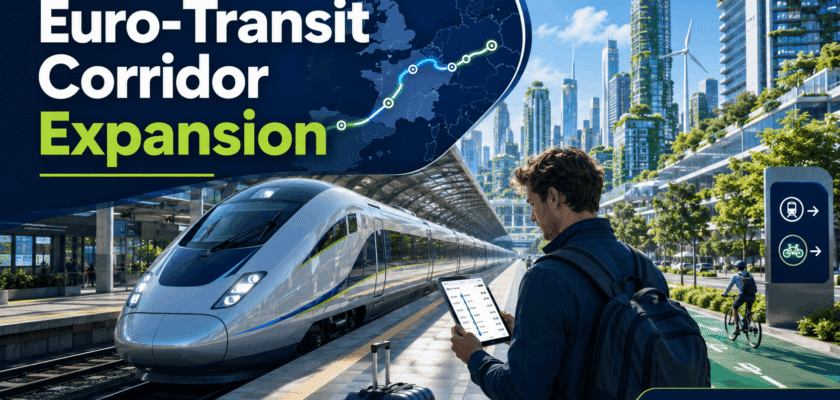
Euro-Transit Corridor Expansion: What Travelers Should Know
Euro-transit corridor expansion is changing how travelers plan city trips. Rail is becoming more than a transport choice. It is now part of the green travel story.
The European Commission launched a plan in November 2025 to speed up high-speed rail across Europe. It wants faster, safer and cleaner rail links between major cities.
For travelers, this shift is useful. It can reduce airport stress. It can also connect city centers with fewer transfer steps.
However, not every route is active today. Some links are planned. Others are being upgraded. So travelers must check live schedules before booking.
| KEY TAKEAWAYThe best green trip is not only about a train ticket. It also needs a smart city plan, easy transfers and low-stress local transport. |
Euro-Transit Corridor Expansion and Green City Travel
Green city travel works best when rail and local mobility fit together. A high-speed train can bring you into the city. Then metro, bus, bike and walking routes finish the trip.
Copenhagen is a strong example. The city is known for cycling, clean public transport and climate-focused planning.
Da Nang is a different case. It is not part of a European rail corridor. Yet it offers a useful green-city lesson. World Bank work in Da Nang supported drainage, wastewater, roads and public transport under a sustainable city project.
Why Cross-Border Rail Is Getting More Attention
Short flights are easy to book. Still, they can add airport queues, baggage checks and city-edge transfers.
Rail can solve some of that friction. It often starts and ends near city centers. It also supports lower-carbon travel goals.
The EU mobility plan aims to double high-speed rail traffic by 2030. It also aims to triple it by 2050. This gives rail a larger role in future travel.
Simple Travel Benefits
✓ Less airport waiting on many city-to-city routes.
✓ Easier arrival near central areas.
✓ Lower stress for families and older travelers.
✓ Better link with metro, tram, bus and bikes.
✓ Cleaner travel choices for eco-focused tourists.
✓ More time to see cities between stops.
How to Plan a Green Rail Itinerary
First, choose cities that already have strong public transport. This makes the full trip cleaner and easier.
Next, check whether the rail route is direct. If not, compare transfer time with flight time.
Then, book hotels near stations or metro lines. This reduces taxi use. It also saves time.
Finally, keep one buffer hour for cross-border changes. Timetables can shift. Platforms can also change.
Fast Checklist
✓ Check official rail websites before booking.
✓ Use city-center stations when possible.
✓ Pick hotels near transit nodes.
✓ Pack lighter for station transfers.
✓ Save tickets offline.
✓ Check bike, luggage and seat rules.
✓ Keep passports ready on cross-border routes.
Copenhagen Lesson: Make the Last Mile Easy
Copenhagen shows why local design matters. A rail trip feels better when the city makes walking, cycling and transit simple.
CIVITAS notes that Copenhagen supports cycling as a primary mode of transport. It also points to more than 390 kilometers of bike lanes.
State of Green says Copenhagen planned to convert all bus lines to zero-emission buses by 2025. This is important for cleaner arrivals after rail trips.
Da Nang Lesson: Green Cities Need Strong Basics
Da Nang gives a different lesson. Green travel needs more than visitor attractions. It also needs drainage, roads, wastewater systems and better public transport.
The World Bank says Da Nang Sustainable City Development Project had $272 million in IDA financing. Its aim included better drainage, wastewater, roads and public transport.
So, travelers should look beyond slogans. A real green city must support clean movement for residents and visitors.
What Can Go Wrong
⚠ New routes may be announced before they are active.
⚠ Border checks can add time on some trips.
⚠ Cheap flights may look faster but hide airport transfers.
⚠ Station hotels may cost more in peak season.
⚠ Luggage rules can differ by rail operator.
⚠ Some green-city claims may be marketing only.
How Travelers Can Compare Rail and Flight
Compare door-to-door time, not only travel time. This is the easiest rule.
Add the time needed to reach the airport. Then add security, boarding and baggage time.
After that, compare the train. Many rail trips start closer to the city center. This can make the total trip shorter.
Also compare comfort. A train may offer more space, easier movement and better views.
Green City Itinerary Blueprint
✓ Day 1: Arrive by rail and walk the station district.
✓ Day 2: Use metro, tram or bus for main sights.
✓ Day 3: Rent a bike or join a walking route.
✓ Day 4: Take a regional train to a nearby town.
✓ Day 5: Leave by rail with a two-hour buffer.
Who Should Use This Travel Style
This model suits slow travelers. It also suits families, solo travelers and remote workers.
It is useful for people who dislike airport stress. It also helps travelers who want a cleaner route.
However, it may not suit every trip. Long distances can still need flights. Remote areas may also lack rail links.
Organic Search Summary for Travelers
Euro-transit corridor expansion is making rail a stronger travel choice. It connects cleaner transport with green-city planning.
The best plan checks both sides. First, check intercity rail. Then, check local transit.
Copenhagen shows strong last-mile design. Da Nang shows why green city basics also matter.
Conclusion
Euro-transit corridor expansion is not just a rail story. It is a new way to design cleaner trips.
Travelers should use official schedules. They should also choose cities with strong local transport.
In the end, the best eco trip feels simple. It is easy to book, easy to move through and better for the city.
Frequently Asked Questions
Q. What is Euro-transit corridor expansion?
It means better cross-border rail and city transport links that make European travel easier and cleaner.
Q. Are all new high-speed rail routes active now?
No. Some are active. Some are planned. Always check official schedules before booking.
Q. Why are green cities important for rail trips?
They make the last mile easier through metro, bus, cycling and walking routes.
Q. Is Copenhagen linked to Da Nang by rail?
No. They are used here as green-city planning examples, not as one rail route.
Q. How can I plan an eco-friendly rail trip?
Use direct trains, stay near stations, travel light and use local public transport.


