
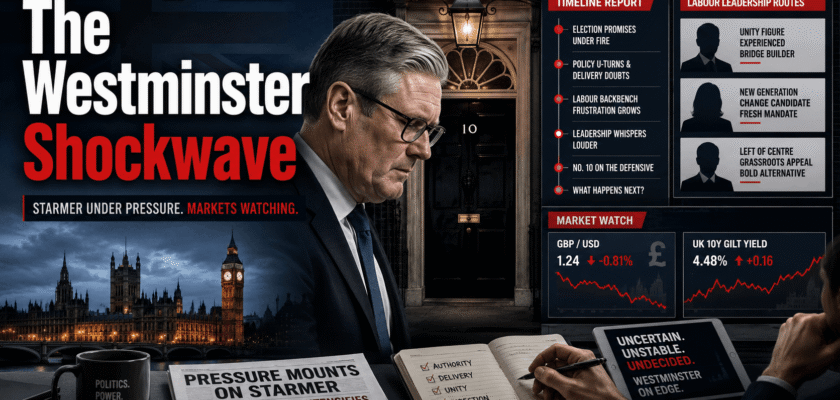
Westminster Shockwave: What the Report Says
Westminster shockwave is the clearest phrase for the mood in British politics right now. A report says Prime Minister Keir Starmer may announce a resignation timeline on Monday. Yet the story is still developing.
Reuters reported that The Observer said Starmer was expected to resign and set out an orderly exit. Reuters also carried a key caution. A government source said Starmer was still focused on his work.
That contrast matters. Readers should separate a reported timetable from a confirmed Downing Street announcement. Until an official statement arrives, the safer wording is: Starmer is under intense pressure and a Monday statement is being widely watched.
The pressure grew after Andy Burnham won the Makerfield by-election. Reuters said that win gave Burnham a path back to parliament and a stronger route to challenge for Labour leadership.
| KEY TAKEAWAYThe big story is not only whether Starmer leaves. The bigger story is whether Labour can manage a leadership transfer without a long contest, market panic or policy confusion. |
Westminster Shockwave and the Monday Timeline
The Monday timeline is important because it gives markets, MPs and voters a clear watch point. A short statement could calm the party. A delay could deepen the crisis.
The Observer report says an orderly exit may be announced. However, Reuters notes that No. 10 pushed back through a source. This means the next official move is still the deciding event.
Therefore, the timeline should be read in layers. First comes the report. Next comes Downing Street response. Then comes Labour’s internal process. Finally, markets react to the policy path.
Why Labour Pressure Rose So Fast
✓ Heavy local election losses weakened Starmer inside his party.
✓ Andy Burnham returned to Westminster with strong momentum.
✓ Some MPs want a fast handover to avoid a long fight.
✓ Other Labour figures still want a proper contest and policy debate.
✓ Voters and markets are watching whether the government looks stable.
✓ A leadership battle could distract from cost, migration and public-service issues.
How a Labour Leadership Challenge Works
The rules matter because the UK prime minister is also the party leader in this case. The Institute for Government explains that a Labour leadership election can be triggered if the leader resigns or if 20% of Labour MPs nominate a challenger.
This rule gives MPs a strong role. If enough MPs line up behind a challenger, pressure can rise quickly even before a formal contest begins.
Reuters has also explained that Burnham supporters may prefer a smoother handover instead of a long campaign. That route could reduce party damage, but it would still need political agreement.
| PROCESS BOXIf Starmer resigns, the Labour Party process begins. If he does not resign, a challenger would need enough MP support to force the issue under party rules. |
What Andy Burnham Changes
Andy Burnham changes the story because he now has a Westminster route. Reuters said his Makerfield win was a vital step toward replacing Starmer as Labour leader and prime minister.
Burnham is seen by supporters as a better answer to Reform UK pressure. Still, leadership strength is not only about popularity. It also depends on cabinet support, policy clarity and market confidence.
If Burnham becomes the clear successor, investors will ask one simple question. Will fiscal policy stay steady, or will the new team change spending and tax plans?
Possible Scenarios This Week
✓ Scenario 1: Starmer announces an orderly exit timetable.
✓ Scenario 2: Starmer refuses to resign and tries to fight on.
✓ Scenario 3: Labour MPs force a formal leadership route.
✓ Scenario 4: Burnham gathers enough support for a low-contest transfer.
✓ Scenario 5: A wider Labour contest opens with several candidates.
✓ Scenario 6: No final decision comes Monday, keeping markets on edge.
Why Markets Care About the UK Leadership Crisis
Markets dislike unclear policy. A prime ministerial transition can affect the pound, gilts, banking stocks and investor mood.
Reuters previously reported that Starmer pressure had unsettled investors and pushed up government borrowing costs. That is why a clean transition plan matters.
The market issue is not only the name of the next leader. It is the fiscal signal. If the next government suggests higher borrowing, new taxes or sudden policy reversals, markets may react faster.
What Global Readers Should Watch
✓ Any official Downing Street statement on Monday.
✓ Whether Starmer says he will resign or only review his position.
✓ How many Labour MPs publicly back Burnham.
✓ Whether Wes Streeting or another figure enters the race.
✓ Signals about Rachel Reeves and fiscal policy.
✓ Pound and gilt-market reaction after official comments.
✓ The tone from trade unions and Labour-affiliated groups.
Common Mistakes in Reading the Story
⚠ Treating a report as a confirmed resignation.
⚠ Ignoring the government source denial or pushback.
⚠ Assuming Burnham automatically becomes prime minister overnight.
⚠ Forgetting that party rules and parliamentary support still matter.
⚠ Focusing only on personalities and not on fiscal policy.
⚠ Using social media posts instead of verified news or official statements.
Why the Story Could Move Fast
Leadership stories can move quickly when MPs believe the public mood has turned. Once a large group wants a handover, pressure can build hour by hour.
However, a fast move also creates risk. A rushed transfer can leave policy gaps, cabinet uncertainty and voter confusion.
That is why an orderly timetable would be important. It could let Labour choose a leader, explain policy and reduce market uncertainty.
What It Means for India and Global Markets
India and other global markets watch UK politics because Britain remains a financial hub. Policy changes in London can affect investment flows, trade tone and risk sentiment.
A sudden UK leadership change may not directly hit Indian retail investors. Still, it can influence the pound, global headlines and foreign investor mood.
For businesses, the key issues are trade policy, visa policy, green investment and financial-market stability. These areas matter more than political drama alone.
Organic Search Summary for Readers
The Westminster shockwave centers on a report that Keir Starmer may announce a resignation timetable on Monday. The report is serious, but it is still not the same as an official resignation.
Andy Burnham’s by-election win has changed Labour’s internal balance. It gives MPs a visible successor option and raises pressure on Starmer.
The next 48 hours matter. Watch Downing Street, Labour MP support, leadership rules and market reaction.
Conclusion
The Westminster shockwave is now a test of political control. Starmer faces pressure, Burnham has momentum and Labour must decide whether to fight or transfer power.
Yet the story remains report-based until an official statement is made. That is the most important point for readers and publishers.
If Monday brings a clear timetable, the UK may enter a managed transition. If it does not, the leadership crisis could deepen and markets may keep watching every signal from Westminster.
Frequently Asked Questions
Q. Has Keir Starmer officially resigned?
As of this article draft, Reuters reported resignation expectations based on The Observer, but also noted a government source said Starmer remained focused on the job.
Q. Why is Monday important?
Monday is the reported watch point for a possible statement or timetable. It is not a confirmed resignation until officially announced.
Q. Who is the main possible successor?
Andy Burnham is widely reported as the strongest challenger after winning the Makerfield by-election.
Q. How can a Labour leadership contest start?
The Institute for Government says it can start if the leader resigns or if 20% of Labour MPs nominate a challenger.
Q. Why do markets care?
Markets care because leadership uncertainty can affect fiscal policy, the pound, gilts and investor confidence.


