
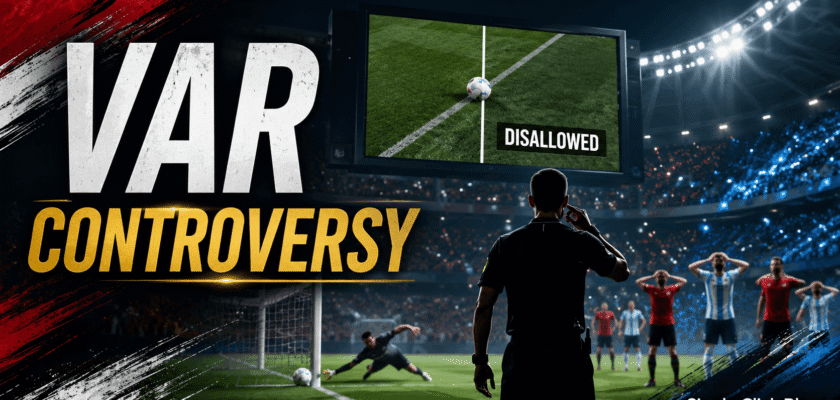
The VAR Controversy Unfolds: Why Egypt Wants Answers After Argentina World Cup Defeat
| �� Quick News Box |
| Argentina beat Egypt 3-2 in the FIFA World Cup 2026 Round of 16 on 7 July 2026.Egypt had led 2-0 late in the game before Argentina scored three late goals.The Egyptian Football Association criticised VAR use and questioned key decisions.FIFA refereeing chief Pierluigi Collina later defended the officials and rejected bias claims. |
Egypt vs Argentina World Cup 2026 VAR has become one of the biggest football talking points of the week.
The match gave fans drama, late goals, anger, and a long debate over video review.
For Egypt, the 3-2 defeat felt painful because the team came close to a famous knockout win.
For Argentina, the comeback kept the defending champions alive and added another bold chapter to their World Cup run.
Egypt vs Argentina World Cup 2026 VAR: What happened?
The Round of 16 match was played at Atlanta Stadium on 7 July 2026.
Egypt looked close to a historic upset. They led Argentina 2-0 with only 11 minutes left, according to match reports.
Then the game turned quickly. Argentina scored three late goals and won 3-2.
However, the result did not end the story. It started a bigger debate about VAR, referee control, and consistency.
Why the VAR decision became the headline
The main flashpoint involved an Egypt goal by Mostafa Zico.
That goal would have doubled Egypt’s lead, but officials ruled it out after a VAR review.
The review found a foul by an Egyptian player in the build-up.
Egypt felt the review went too far back in the move. Many pundits also questioned the decision-making line.
Later, Egypt appealed for a penalty after Hamdy Fathy went down under a challenge. The appeal was waved away.
Soon after that, Argentina went upfield and scored the winning goal in stoppage time.
| ✅ Key Match Talking Points |
| VAR cancelled a major Egypt goal after a build-up foul check.Egypt questioned why another late challenge did not get similar review attention.Argentina’s late comeback turned the match into a global debate.The safest angle is consistency, not proven bias. |
Tactical breakdown: How Egypt nearly shocked Argentina
Egypt’s plan was simple and smart.
They stayed compact, protected central spaces, and waited for fast transitions.
This helped them frustrate Argentina for long spells.
Mohamed Salah remained the emotional and tactical reference point. He forced Argentina to keep extra attention on the right side.
Egypt also used direct passes well. As a result, Argentina could not always settle into a clean rhythm.
How Argentina changed the match late
Argentina did not panic after falling behind.
They pushed more players between the lines and increased the pressure near Egypt’s box.
The late goals changed the emotional balance of the game.
Once Argentina scored, Egypt had to defend deeper. That made every clearance and referee call feel bigger.
In knockout football, one VAR review can change rhythm. One missed appeal can change belief.
What the Egyptian Football Association is asking
The Egyptian Football Association said it could not stay silent after the defeat.
Its public concern focused on the way VAR was used, not just the final score.
The EFA said several incidents raised questions about fairness and consistency.
Reports also said EFA president Hany Abo Rida submitted a complaint against referee Francois Letexier and his assistants.
So, this is now more than fan anger. It has become a formal football governance issue.
FIFA’s response: Officials defended, bias claims rejected
FIFA refereeing chief Pierluigi Collina defended the match officials after the controversy.
He rejected bias claims and stressed that match officials must work without threats or outside pressure.
This matters because referee safety has become a serious issue in modern football.
Fans can debate decisions. However, false claims and abuse can create real risk for officials and families.
| ⚠️ Publish-Safe Angle |
| Do not write that the match was fixed unless FIFA or a court proves it.Use words like “questioned”, “criticised”, “controversial”, and “alleged inconsistency”.Keep the story focused on VAR standards, transparency, and fan trust. |
Why this controversy matters for World Cup football
VAR was created to reduce clear errors.
Yet it can still create confusion when fans do not understand the review line.
The Egypt vs Argentina World Cup 2026 VAR controversy shows one key problem.
People want not only correct decisions. They also want clear explanations.
If viewers hear the logic behind a call, trust may improve.
If the process looks hidden, anger grows faster.
What teams can learn from this match
✓ Players must stay calm after a disputed decision.
✓ Coaches should prepare emotional control plans for knockout games.
✓ Federations should use formal complaints, not only media anger.
✓ FIFA should keep improving public explanations for major VAR calls.
✓ Fans should debate decisions without targeting officials personally.
What to watch next
First, watch whether FIFA gives any deeper explanation of the review process.
Next, watch whether the EFA complaint leads to a formal reply.
Also, watch how referees handle similar build-up fouls in the next knockout matches.
If similar situations get different treatment, the controversy will grow again.
Conclusion: A dramatic defeat becomes a VAR case study
Egypt vs Argentina World Cup 2026 VAR is now more than a match highlight.
It is a case study in pressure, technology, and trust.
Egypt lost a painful game. Argentina survived a huge scare.
However, the biggest debate is about how football explains big calls to the world.
If FIFA wants trust, transparency must improve with every knockout round.


