
| ⚠️ Fact-Safe NoteThis is a business explainer for food operators and readers.It does not claim that every cloud kitchen will raise prices immediately.Final menu action depends on local rent, supplier contracts, platform fees, fuel charges, and demand. |
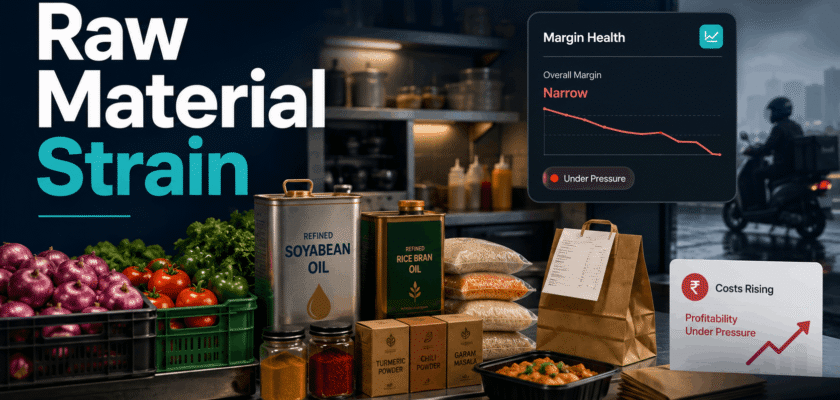
Restaurant grocery raw material inflation 2026 is becoming a serious pressure point for cloud kitchens. A weaker rupee, higher oil risk, and West Asia fuel shocks are hitting food businesses from many sides.
For delivery-only kitchens, the pain can feel sharper. They depend on daily grocery buying, fast delivery, packaging, gas, and platform visibility. So even a small cost rise can hurt margins quickly.
| ✅ Key TakeawayCloud kitchens are not only fighting food inflation.They are also fighting fuel, packaging, delivery, and currency-linked import costs.The safest response is cost control before sudden menu price hikes. |
Why Restaurant Grocery Raw Material Inflation 2026 Matters
Restaurant grocery raw material inflation 2026 matters because cloud kitchens run on thin operating discipline. They may save on dining space, but they spend heavily on ingredients, staff, rent, cooking fuel, packaging, and delivery support.
When onion, tomato, edible oil, dairy, rice, spices, or chicken prices move together, recipe costs rise fast. Moreover, kitchen managers cannot always change the menu price in one day.
Customers compare prices across apps. Therefore, a sudden price increase can reduce repeat orders. This makes inflation a margin problem, not only a menu problem.
How Rupee Weakness Enters A Cloud Kitchen
A weaker rupee first looks like a currency-market story. However, it can slowly reach the kitchen shelf.
Imported edible oils, dry fruits, cheese, sauces, cocoa, coffee, packaging material, and some kitchen equipment can become costlier when the rupee weakens. Even local suppliers may revise rates if their own fuel or import-linked costs rise.
This is why cloud kitchen owners should not track only grocery bills. They should also track supplier quote changes, fuel invoices, and packaging costs every week.
| Rupee Pressure | Can raise import-linked food, packaging, and equipment costs. |
| Fuel Shock | Can increase delivery, wholesale transport, LPG, and cold-chain costs. |
| Monsoon Risk | Can disrupt vegetable arrivals and raise short-term wastage. |
| Platform Pressure | Can limit the speed at which kitchens pass costs to customers. |
How Fuel Price Hikes Impact Food Delivery Logistics
How fuel price hikes impact food delivery logistics is easy to understand. Food delivery depends on riders, bikes, route density, packaging, and fast handovers.
When petrol, diesel, or commercial fuel costs rise, the cost chain reacts. Wholesalers may charge more for transport. Vendors may reduce credit comfort. Delivery partners may seek better incentives. Aggregators may adjust fees or offers.
Cloud kitchens feel this strongly because their full sales model depends on delivery. A dine-in restaurant can still serve nearby customers. A cloud kitchen must move every order from kitchen to doorstep.
| ✅ Simple Cost ChainOil shock rises → transport costs rise.Transport costs rise → supplier quotes rise.Supplier quotes rise → recipe cost rises.Recipe cost rises → cloud kitchen margin falls. |
Why Cloud Kitchen Margins React Faster
Cloud kitchens often work with high order volume and tight menu pricing. Their unit economics depend on repeat orders, stable recipes, and predictable delivery cost.
If raw material cost rises by even 3% to 5%, the effect can be large. That is because platform commissions, discounts, packaging, and delivery-linked charges already reduce the final take-home value.
As a result, kitchens may first reduce discounting. Then they may change portion size. Finally, they may revise menu prices if the pressure continues.
Managing Commercial Kitchen Overheads Under Inflation
Managing commercial kitchen overheads under inflation needs a calm system. Random cuts can damage food quality. However, smart controls can protect both taste and margins.
✅ Review recipe cost sheets every seven days.
✅ Lock prices for key staples when suppliers offer fair contracts.
✅ Reduce wastage with batch prep and smaller holding trays.
✅ Keep two backup vendors for vegetables, poultry, dairy, and packaging.
✅ Track rider wait time because slow handovers raise hidden delivery cost.
✅ Create a low-cost hero menu that protects order volume.
The goal is not to cut every cost. The goal is to protect the best-selling dishes while removing waste from the kitchen flow.
Which Menu Items Face The Most Pressure
Some menu items are more sensitive than others. Chicken bowls, cheese-loaded snacks, fried items, premium beverages, dry-fruit desserts, and imported sauce dishes can become expensive faster.
On the other hand, dal, rice bowls, seasonal vegetable meals, millet snacks, and simple thalis may offer better margin control if recipes are planned well.
Therefore, cloud kitchens should build a balanced menu. A few premium items can stay. But the order engine should depend on dishes with steady supply and low wastage.
| ✅ Cloud Kitchen Action PlanKeep one premium menu section, but do not depend on it fully.Build value meals with stable local ingredients.Use seasonal vegetables to reduce price shocks.Avoid deep discounts on high-cost dishes during fuel volatility. |
Should Cloud Kitchens Raise Prices Now?
A direct price hike is not always the first move. Cloud kitchens should first measure the real cost change dish by dish.
If only two ingredients are rising, update those recipes. If transport, packaging, and fuel are rising together, then a small and transparent price correction may be needed.
Still, price hikes should be simple. A small increase on high-demand items is safer than a sudden large jump across the whole menu.
Conclusion: Restaurant Grocery Raw Material Inflation 2026 Needs Discipline
Restaurant grocery raw material inflation 2026 is not only a grocery problem. It is a full supply-chain problem for cloud kitchens. Rupee weakness, West Asia fuel shocks, delivery logistics, packaging, and monsoon-linked supply can all squeeze margins together.
The best kitchens will not panic. Instead, they will audit recipes, reduce wastage, build vendor backup, protect hero items, and adjust prices only when the numbers prove it.


