
Hyper-Personalized Medicine: How Genetic Testing is Changing Your Prescription in 2026
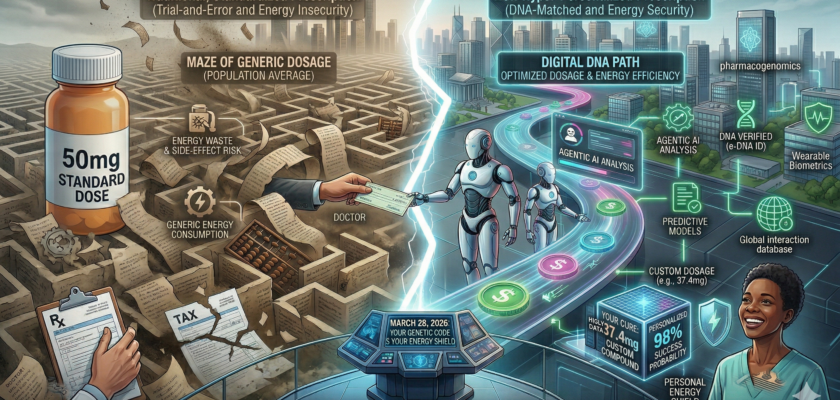
For over a century, the practice of medicine has largely relied on a “one-size-fits-all” approach to prescriptions. When diagnosed with a condition—say, hypertension or depression—most patients receive the same initial medication at the same standard dosage, based on population averages. If it doesn’t work or causes severe side effects, the doctor switches to the next standard drug. This “trial-and-error” method is inefficient, costly, and can be dangerous.
By March 2026, this archaic model is being rapidly replaced by Hyper-Personalized Medicine. This paradigm shift is powered by two converging technologies: affordable, comprehensive Genetic Testing and sophisticated Agentic AI.
Today, your genetic blueprint is not just a glimpse into your ancestry; it is the definitive manual your doctor uses to tailor your treatment plan, fundamentally changing what, how, and when you take your medication.
1. The Code Behind the Prescription: What is Pharmacogenomics?
At the heart of hyper-personalized medicine is a specialized field called Pharmacogenomics. This is the study of how your unique genetic makeup (your genome) affects your body’s response to drugs.
Your DNA dictates:
- Metabolism Speed: Genes control how quickly your liver enzymes break down medication. If you are a “rapid metabolizer,” a standard dose might be ineffective because your body eliminates it too fast. If you are a “poor metabolizer,” that same dose could accumulate to toxic levels.
- Drug Absorption: Genetics determine how effectively your body absorbs a drug from the gastrointestinal tract.
- Target Interaction: DNA influences the structure of the receptors on cells that the drug is designed to target. Subtle variations can make a medication highly effective for one person and completely useless for another.
2. How 2026 Technology Makes it “Hyper”
While pharmacogenomics has existed for years, 2026 represents its clinical breakout. Genetic testing has become incredibly fast (results in under 2 hours for a standard panel) and affordable, often integrated into standard annual physicals.
The crucial addition is Agentic AI—autonomous digital health agents that operate 24/7. These agents analyze your complete 3D genetic sequence instantly. They don’t just provide a static report; they proactively cross-reference your DNA with:
- Your real-time biometric data (from wearables).
- Your complete medical history.
- A global database of drug interactions and clinical trial outcomes.
This allows for the ultimate degree of personalization:
| Feature | Old Model: Trial-and-Error | 2026 Model: Hyper-Personalized |
| Prescription Choice | Based on “Population Average.” | Based on “Patient DNA.” |
| Initial Dosage | Standard (e.g., 50mg). | Custom (e.g., 37.4mg, verified by DNA). |
| Adjustment Speed | Weeks or Months. | Near-Instant. |
| Side Effect Risk | High, unpredicted. | Significantly minimized via predictive models. |
| Efficiency | Multiple switches often needed. | Targeted and often correct the first time. |
3. A Day in the Life: Prescribing in 2026
Imagine visiting your doctor with symptoms of severe anxiety. In the old model, you would leave with a standard SSRI prescription. You’d be told it might take 4-6 weeks to see if it works, and to watch for a long list of side effects.
In 2026, the visit is different:
- Instant DNA Check: With your consent, your doctor runs a rapid, comprehensive genetic panel (often a buccal swab).
- AI Analysis: Before the doctor even enters the exam room, an Agentic AI has analyzed the results.
- The DNA-Matched Prescription: The AI highlights which specific classes of anxiety medication are highly compatible with your metabolic enzymes and receptor types, and which ones present a 90% risk of causing side effects.
- Optimized Dosage: For the chosen drug, the AI calculates a custom initial dosage (e.g., 18.5mg instead of the standard 20mg) based exactly on your liver enzyme activity.
- Predictive Outcome: The AI provides a percentage chance of successful treatment response based on similar DNA profiles in its global database.
4. Impact on Key Medical Sectors
- Oncology (Cancer): Hyper-personalization is now standard. Doctors use genetic testing to identify specific mutations within the tumor itself to select highly targeted therapies (e.g., only if your tumor has mutation X, will drug Y work).
- Mental Health: Pharmacogenomics is revolutionizing treatment for depression, anxiety, and ADHD, dramatically reducing the time-to-effective-treatment.
- Cardiology: Genetic markers help determine the precise risk profile for clotting or bleeding, guiding the use of blood thinners like Warfarin.
5. Challenges and Ethics
Despite the promise, challenges remain in 2026:
- Data Privacy & Security: Protecting sensitive genetic and biometric data from breaches is paramount.
- Equity: Ensuring this advanced level of care is accessible to all populations, not just those with premium insurance or in urban centers.
- Regulation: Defining the responsibility of the AI versus the physician in final prescription decisions.
Conclusion
In March 2026, we are witnessing the end of generalized medicine. Hyper-personalized healthcare, powered by genetic testing and Agentic AI, means your treatment is as unique as your DNA. It promises faster recoveries, fewer side effects, and more effective prevention, fundamentally redefining energy security in the medical field. Your code is now your cure.
What is your experience with generic vs. personalized medicine? Would you trust AI to select your optimal prescription? Share your thoughts in the comments below!


