
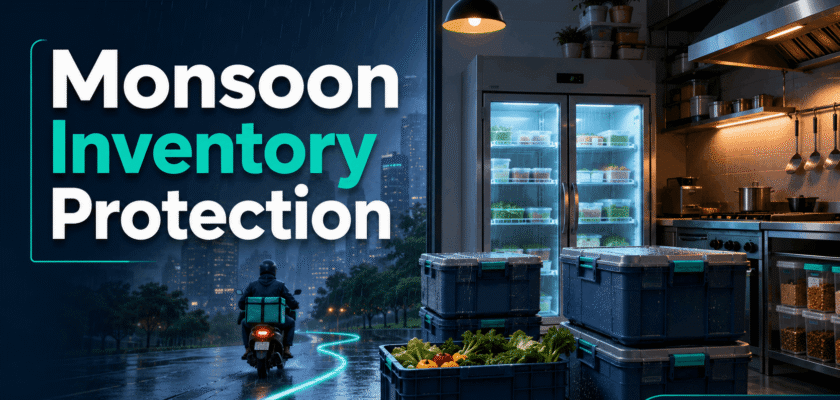
Cloud Kitchen Logistics During Flooding 2026: Monsoon Inventory Protection in Surat and Palghar
Cloud kitchen logistics during flooding 2026 is now a serious survival plan for food businesses. In Surat and Palghar, heavy rain can stop riders, delay vendors, and spoil fresh stock quickly.
Therefore, smart kitchens are changing how they buy, store, cook, and deliver food during the monsoon. The goal is simple. They want less waste and better control over raw material costs.
This guide explains that shift in a practical way. It is useful for small cloud kitchens, tiffin brands, cafe kitchens, and delivery-only food startups.
| ✅ Quick takeaway: During flooding, a cloud kitchen should not stock for hope. It should stock for confirmed demand, safe routes, and backup vendors. |
Why cloud kitchen logistics during flooding 2026 matters now
Surat and nearby South Gujarat districts have seen intense rain spells this July. Reports mention waterlogging, blocked roads, and red alert conditions in parts of the region.
Palghar has also faced heavy rain, flooding, rail disruption, power cuts, and evacuation pressure in some areas.
For a delivery-only kitchen, this is not just a weather issue. It is a stock issue, a safety issue, and a margin issue.
Fresh vegetables, paneer, milk, bread, sauces, chicken, fish, and batters can spoil fast. Also, road delays can turn good stock into dead stock.
The new sourcing rule: buy less, but buy smarter
Earlier, many small kitchens bought extra stock before heavy rain. That felt safe. However, it often created waste.
Now, smarter operators use smaller purchase batches. They split orders between two or three nearby vendors.
Also, they keep a wet-day menu ready. This menu uses fewer fragile ingredients. It also uses items with better shelf life.
For example, a kitchen may reduce fresh salad bowls during flood alerts. Instead, it may push hot rice bowls, khichdi bowls, sandwiches, wraps, and baked snacks.
How managing restaurant raw material costs works in a rainy week
Managing restaurant raw material costs starts with simple stock grading.
Grade A items are highly perishable. These include leafy greens, dairy, cut fruit, fresh cream, seafood, and marinated meat.
Grade B items are medium-risk. These include paneer blocks, bread, cooked sauces, dosa batter, and cut vegetables.
Grade C items are safer. These include rice, dal, flour, spices, oil, pulses, dry pasta, frozen paratha, and sealed packaging material.
During flooding, kitchens should cut Grade A purchases first. Then, they should increase Grade C backup stock within safe limits.
A simple Surat and Palghar monsoon playbook
Cloud kitchens in Surat should watch short, intense rain bursts. Even a two-hour downpour can block local roads and delay vendor vans.
Palghar kitchens should also track train delays and power cuts. These two issues can affect staff arrival and cold storage.
So, every kitchen should prepare a 48-hour monsoon map. It should show safe vendors, unsafe routes, backup riders, and nearby cold-storage options.
This map does not need expensive software. A shared spreadsheet can work for small kitchens.
Culinary supply chain resilience strategies that actually help
Culinary supply chain resilience strategies should be simple enough for daily use.
First, keep two suppliers for every key ingredient. One should be close to the kitchen. The other should be outside the main flood pocket.
Next, set cut-off times for vendor orders. Do not wait until lunch rush to order emergency stock.
Also, use recipe-based inventory tracking. If one biryani bowl uses 120 grams of rice, then daily demand can be predicted better.
Finally, review wastage every night. This helps the owner see which items fail during rain.
What kitchens should not do during flood alerts
Do not overstock fresh dairy only because sales were high last weekend.
Do not accept far-route orders when rider movement is unsafe.
Do not keep open sacks on wet floors.
Do not mix wet packaging with dry packaging.
Do not serve stock that crossed safe holding time.
Also, do not hide delay risks from customers. Clear communication protects ratings.
48-hour monsoon inventory checklist
Check all refrigerators before the rain peak.
Move dry goods above floor level.
Seal flour, rice, spices, and paper packaging.
Freeze base gravies in small batches.
Reduce slow-moving fresh items.
Keep a short menu for flood days.
Call vendors before opening the delivery app.
Check rider safety before accepting long-distance orders.
Update customers about rain delays quickly.
Conclusion: build a kitchen that bends, not breaks
Cloud kitchen logistics during flooding 2026 is not only about delivery speed. It is about food safety, cash flow, and trust.
Surat and Palghar show why monsoon planning must be local. Rain can change routes, prices, and demand in just one day.
Therefore, the best kitchen is flexible. It buys in smart batches. It keeps backup vendors. It protects cold stock. Most importantly, it avoids waste before it starts.
That is how small food brands can survive a hard monsoon without losing taste, safety, or profit.
| ✅ Practical table: use this as a daily monsoon stock check before lunch and dinner shifts. | ||
| Rain risk | Kitchen action | Why it helps |
| Waterlogged vendor route | Shift to nearby backup vendor | Cuts late delivery and spoilage risk |
| Power cut risk | Use smaller cold batches | Protects dairy, sauces, and meat |
| High rider delay | Shorten delivery radius | Keeps food hot and ratings stable |
| Low order predictability | Run a limited rain menu | Reduces dead stock |
| Packaging damage | Store boxes above floor level | Prevents soggy parcels |


